
Beyond Factual Grounding: The Case for Opinion-Aware Retrieval-Augmented Generation
arXiv cs.AI / 4/15/2026
💬 OpinionIdeas & Deep AnalysisModels & Research
Key Points
- The paper argues that today’s retrieval-augmented generation (RAG) systems disproportionately favor factual, objective content, largely treating opinions as noise in existing benchmarks and datasets.
- It frames the limitation as a mismatch between uncertainty types—epistemic uncertainty for factual queries versus aleatoric uncertainty for opinion queries—and proposes that opinion-aware RAG should preserve posterior entropy rather than minimize it.
- The authors introduce an Opinion-Aware RAG architecture that extracts opinions with an LLM, represents them via entity-linked opinion graphs, and indexes documents with opinion-enriched signals.
- Experiments on e-commerce seller forum data show improved retrieval diversity versus a traditional factual RAG baseline, including +26.8% sentiment diversity, +42.7% entity match rate, and +31.6% author demographic coverage.
- The work positions opinion-aware retrieval as a step toward more representative, transparent, and accountable AI while highlighting risks like echo chambers and minority underrepresentation.
Related Articles
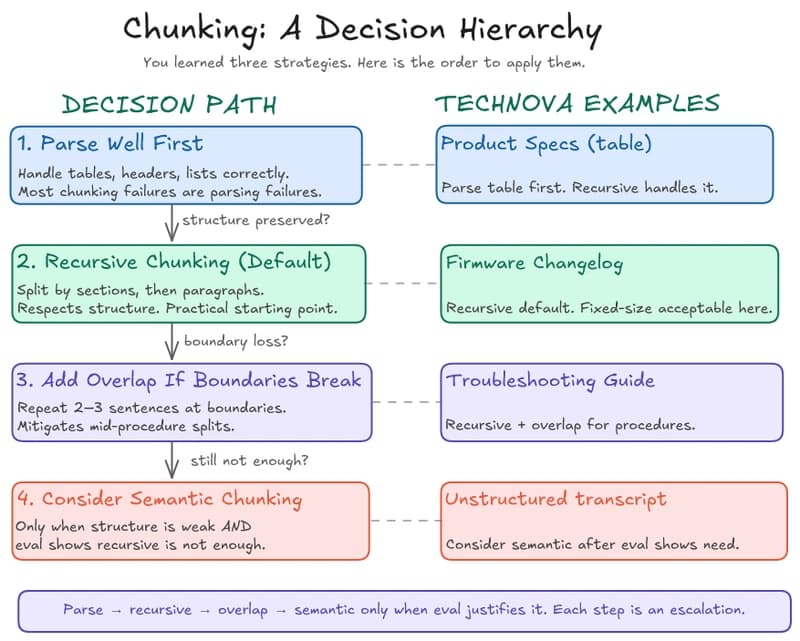
RAG in Practice — Part 4: Chunking, Retrieval, and the Decisions That Break RAG
Dev.to
Why dynamically routing multi-timescale advantages in PPO causes policy collapse (and a simple decoupled fix) [R]
Reddit r/MachineLearning
How AI Interview Assistants Are Changing Job Preparation in 2026
Dev.to
Consciousness in Artificial Intelligence: Insights from the Science ofConsciousness
Dev.to

NEW PROMPT INJECTION
Dev.to


