
Improving Sparse Autoencoder with Dynamic Attention
arXiv cs.LG / 4/17/2026
📰 NewsModels & Research
Key Points
- The paper addresses a key practical limitation of sparse autoencoders (SAEs): choosing the right sparsity level is difficult because too much sparsity hurts reconstruction and too little degrades interpretability.
- It proposes a new SAE formulation built on a cross-attention architecture, where latent features serve as queries and a learnable dictionary provides key and value matrices.
- The method uses sparsemax-based dynamic sparse attention to infer activation counts in a data-dependent way, aiming to avoid the need for extra sparsity regularization or carefully tuned hyperparameters.
- Experiments and visualizations indicate improved reconstruction loss and high-quality learned concepts, with particular strength on top-n classification tasks.
Related Articles
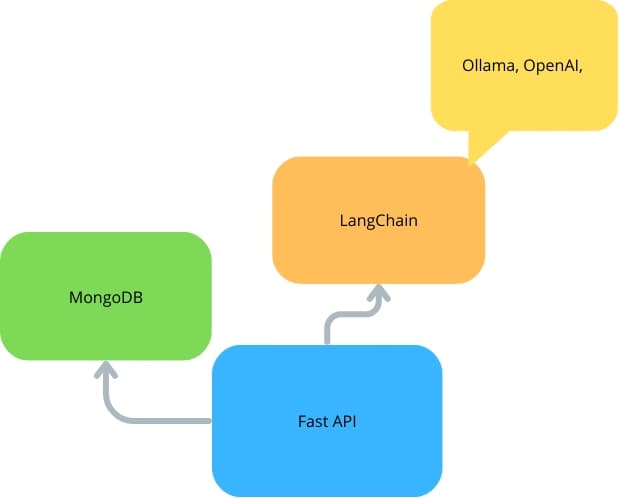
FastAPI With LangChain and MongoDB
Dev.to
![[2026] OpenTelemetry for LLM Observability — Self-Hosted Setup](/_next/image?url=https%3A%2F%2Fmedia2.dev.to%2Fdynamic%2Fimage%2Fwidth%3D1200%2Cheight%3D627%2Cfit%3Dcover%2Cgravity%3Dauto%2Cformat%3Dauto%2Fhttps%253A%252F%252Fdev-to-uploads.s3.amazonaws.com%252Fuploads%252Farticles%252Flu4b6ttuhur71z5gemm0.png&w=3840&q=75)
[2026] OpenTelemetry for LLM Observability — Self-Hosted Setup
Dev.to

The AI Education Product on Product Hunt Worth Watching
Dev.to

The joy and pain of training an LLM from scratch
Reddit r/LocalLLaMA

Did you know that you can use Qwen3.5-35B-A3B-Base as an instruction/reasoning Model?
Reddit r/LocalLLaMA


