
Momentum-constrained Hybrid Heuristic Trajectory Optimization Framework with Residual-enhanced DRL for Visually Impaired Scenarios
arXiv cs.RO / 4/17/2026
📰 NewsModels & Research
Key Points
- The paper introduces the Momentum-Constrained Hybrid Heuristic Trajectory Optimization Framework (MHHTOF) to enable safer and more efficient assistive planning in visually impaired scenarios that are difficult for existing methods.
- MHHTOF balances comfort and safety by combining a Heuristic Trajectory Sampling Cluster with momentum-constrained optimization that suppresses abrupt changes in velocity and acceleration.
- It adds a residual-enhanced deep reinforcement learning module to refine candidate trajectories, improving temporal modeling and generalization of the resulting policy.
- A dual-stage cost modeling mechanism regulates optimization using Frenet-space costs for consistency and adaptive, reward-driven weights in Cartesian space to incorporate user preferences for interpretability and user-centric decision-making.
- Experiments indicate faster convergence (about half as many iterations as baselines) and lower, more stable costs, with improved robustness and reduced risk in complex dynamic environments.
Related Articles
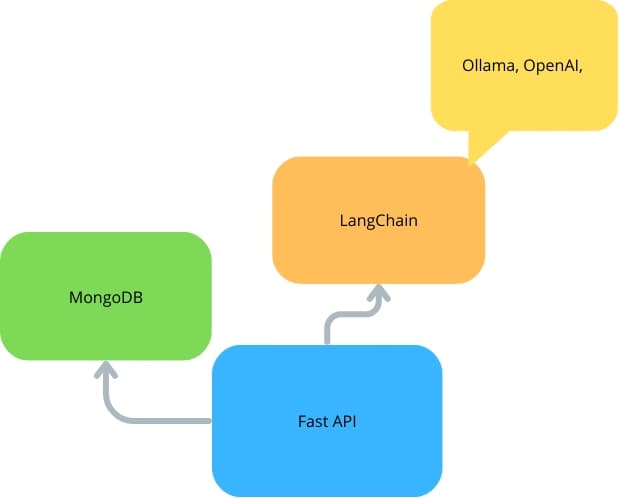
FastAPI With LangChain and MongoDB
Dev.to
![[2026] OpenTelemetry for LLM Observability — Self-Hosted Setup](/_next/image?url=https%3A%2F%2Fmedia2.dev.to%2Fdynamic%2Fimage%2Fwidth%3D1200%2Cheight%3D627%2Cfit%3Dcover%2Cgravity%3Dauto%2Cformat%3Dauto%2Fhttps%253A%252F%252Fdev-to-uploads.s3.amazonaws.com%252Fuploads%252Farticles%252Flu4b6ttuhur71z5gemm0.png&w=3840&q=75)
[2026] OpenTelemetry for LLM Observability — Self-Hosted Setup
Dev.to

The AI Education Product on Product Hunt Worth Watching
Dev.to

The joy and pain of training an LLM from scratch
Reddit r/LocalLLaMA

Did you know that you can use Qwen3.5-35B-A3B-Base as an instruction/reasoning Model?
Reddit r/LocalLLaMA


