
Exploring Concept Subspace for Self-explainable Text-Attributed Graph Learning
arXiv cs.LG / 4/15/2026
💬 OpinionIdeas & Deep AnalysisModels & Research
Key Points
- This paper proposes Graph Concept Bottleneck (GCB), a new paradigm for self-explainable learning on text-attributed graphs by mapping graphs into a concept bottleneck space of meaningful phrase-level concepts.
- Predictions are driven by the activation of these concepts, offering a form of interpretability that differs from prior interpretable approaches that primarily use explanatory subgraphs.
- The authors refine the concept space using the information bottleneck principle to keep only the most relevant concepts, producing explanations that are both more concise and more faithful.
- Empirical results indicate GCB achieves “intrinsic interpretability” with accuracy comparable to black-box graph neural networks.
- GCB also shows improved robustness and generalizability, performing better under distribution shifts and data perturbations due to concept-guided prediction.
Related Articles
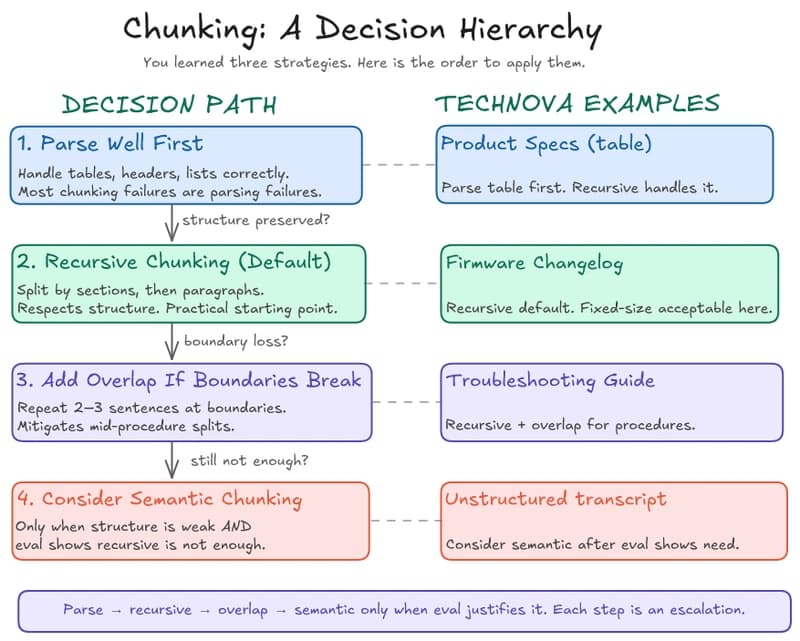
RAG in Practice — Part 4: Chunking, Retrieval, and the Decisions That Break RAG
Dev.to
Why dynamically routing multi-timescale advantages in PPO causes policy collapse (and a simple decoupled fix) [R]
Reddit r/MachineLearning

How AI Interview Assistants Are Changing Job Preparation in 2026
Dev.to

Consciousness in Artificial Intelligence: Insights from the Science ofConsciousness
Dev.to

NEW PROMPT INJECTION
Dev.to


