
From Boundaries to Semantics: Prompt-Guided Multi-Task Learning for Petrographic Thin-section Segmentation
arXiv cs.CV / 4/17/2026
📰 NewsModels & Research
Key Points
- The paper addresses joint grain-edge segmentation (GES) and lithology semantic segmentation (LSS), which are typically handled separately despite enabling more complete rock fabric and composition quantification.
- Although Segment Anything Model (SAM) shows strong boundary alignment, the authors argue that directly adapting it to petrographic thin-section images is difficult due to severe domain gaps from extinction-dependent color variation and ultra-fine grain boundaries.
- The proposed Petro-SAM is a two-stage, prompt-guided multi-task framework built on SAM, designed to improve joint performance on multi-angle petrographic image stacks.
- Petro-SAM uses a Merge Block to integrate seven polarized views, aiming to mitigate extinction-related issues, and adds multi-scale feature fusion plus color-entropy priors to refine segmentation results.
Related Articles
langchain-anthropic==1.4.1
LangChain Releases
Talk to Your Favorite Game Characters! Mantella Brings AI to Skyrim and Fallout 4 NPCs
Dev.to
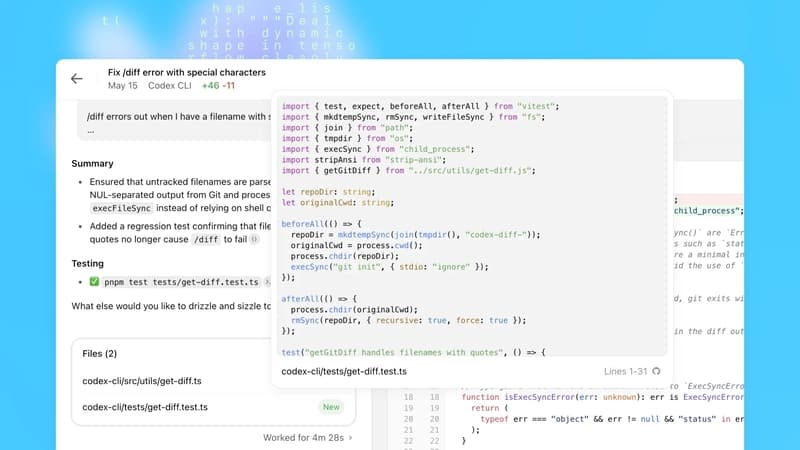
OpenAI Codex Update Adds macOS Agent, Browser, Memory; 3M Weekly Users
Dev.to
1.14.2
CrewAI Releases

Should my enterprise AI agent do that? NanoClaw and Vercel launch easier agentic policy setting and approval dialogs across 15 messaging apps
VentureBeat


