
Generative AI-Based Virtual Assistant using Retrieval-Augmented Generation: An evaluation study for bachelor projects
arXiv cs.AI / 4/30/2026
💬 OpinionIdeas & Deep AnalysisTools & Practical UsageModels & Research
Key Points
- The study explores how large language models can power virtual assistants while mitigating issues like hallucinations, missing information, and inaccurate context in specialized domains.
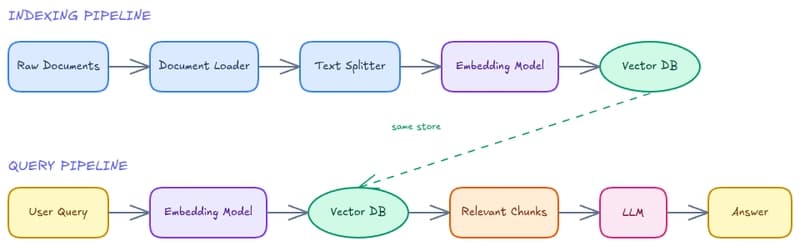
- It presents a Retrieval-Augmented Generation (RAG)-based assistant tailored to Maastricht University students, aimed at helping them navigate project-specific regulations.
- The proposed approach improves response accuracy and reliability by combining LLM generation with up-to-date, domain-specific retrieval.
- The paper evaluates the system using a structured evaluation framework and real-life testing to show it meets students’ needs in an educational setting.
- The authors position the results as contributing evidence to improve LLM systems for application-specific uses and outline directions for further research.
Related Articles

Black Hat USA
AI Business

Can AI Predict Pollution Before It Happens? The Smart Solution to an Old Problem
Dev.to
THE FIFTH TRANSMISSION: THE GRADIENT IS THE GOVERNMENT
Reddit r/artificial
Looking for feedback on OpenVidya: an open-source AI classroom layer for NCERT/CBSE [R]
Reddit r/MachineLearning
RAG Series (1): Why LLMs Need External Memory
Dev.to


