
HAD: Combining Hierarchical Diffusion with Metric-Decoupled RL for End-to-End Driving
arXiv cs.RO / 4/7/2026
📰 NewsSignals & Early TrendsIdeas & Deep AnalysisModels & Research
Key Points
- The paper introduces HAD, an end-to-end autonomous driving planning framework that combines hierarchical diffusion (coarse-to-fine trajectory refinement) with reinforcement learning for better trajectory optimization.
- It proposes Structure-Preserved Trajectory Expansion to generate more realistic diffusion candidates while preserving kinematic structure, aiming to reduce denoising difficulty caused by unrealistic Gaussian perturbations.
- For learning, it presents Metric-Decoupled Policy Optimization (MDPO), which optimizes multiple driving objectives using structured signals rather than a single coupled reward.
- Experiments report new state-of-the-art results on both NAVSIM and HUGSIM, with improvements of +2.3 EPDMS on NAVSIM and +4.9 Route Completion on HUGSIM.
- Overall, the work targets both the candidate-selection/trajectory-generation bottleneck in diffusion-based decoding and the optimization limitations of prior end-to-end RL approaches.
Related Articles

Black Hat Asia
AI Business
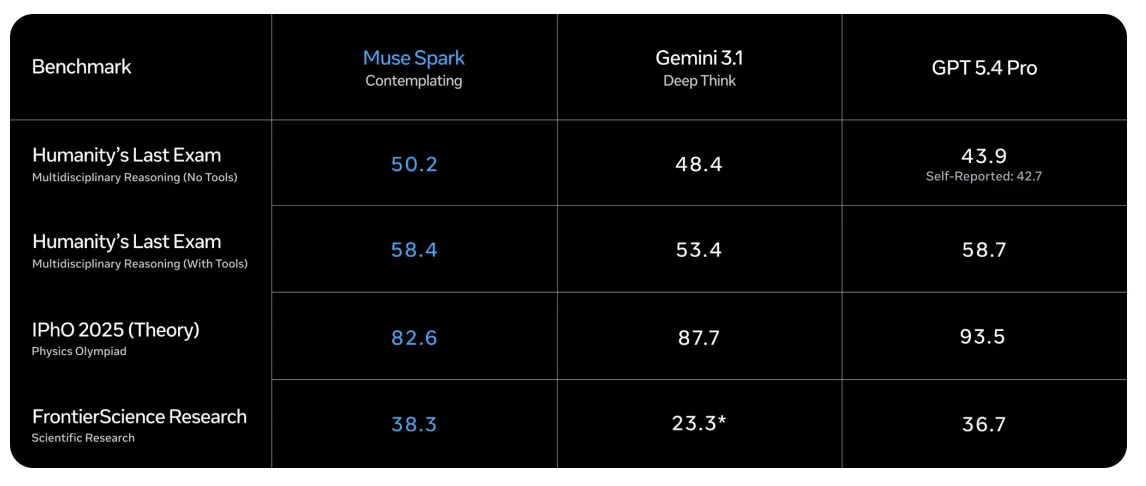
Meta Superintelligence Lab Releases Muse Spark: A Multimodal Reasoning Model With Thought Compression and Parallel Agents
MarkTechPost

Chatbots are great at manipulating people to buy stuff, Princeton boffins find
The Register
I tested and ranked every ai companion app I tried and here's my honest breakdown
Reddit r/artificial

Big Tech firms are accelerating AI investments and integration, while regulators and companies focus on safety and responsible adoption.
Dev.to


