
Skill-RAG: Failure-State-Aware Retrieval Augmentation via Hidden-State Probing and Skill Routing
arXiv cs.CL / 4/20/2026
📰 NewsIdeas & Deep AnalysisModels & Research
Key Points
- The paper argues that many persistent RAG retrieval failures are caused by a misalignment between the query and the evidence representation space, not by a lack of relevant documents.
- It introduces Skill-RAG, which adds a lightweight hidden-state prober and a prompt-based skill router to diagnose failure states instead of simply retrying retrieval.
- Skill-RAG gates retrieval at two pipeline stages and, when a failure is detected, selects one of four “retrieval skills” (query rewriting, question decomposition, evidence focusing, or an exit for irreducible cases) to correct misalignment before the next generation attempt.
- Experiments on multiple open-domain QA and complex reasoning benchmarks show notable accuracy improvements on hard, multi-turn-persistent cases, with especially strong gains on out-of-distribution datasets.
- Representation-space analyses suggest the different retrieval skills correspond to structured and separable regions of the failure-state space, indicating misalignment is a typed phenomenon.
💡 Insights using this article
This article is featured in our daily AI news digest — key takeaways and action items at a glance.
Related Articles
Awesome Open-Weight Models: The Practitioner's Guide to Open-Source LLMs (2026 Edition) [P]
Reddit r/MachineLearning
The Mythos vs GPT-5.4-Cyber debate is missing the benchmark
Dev.to
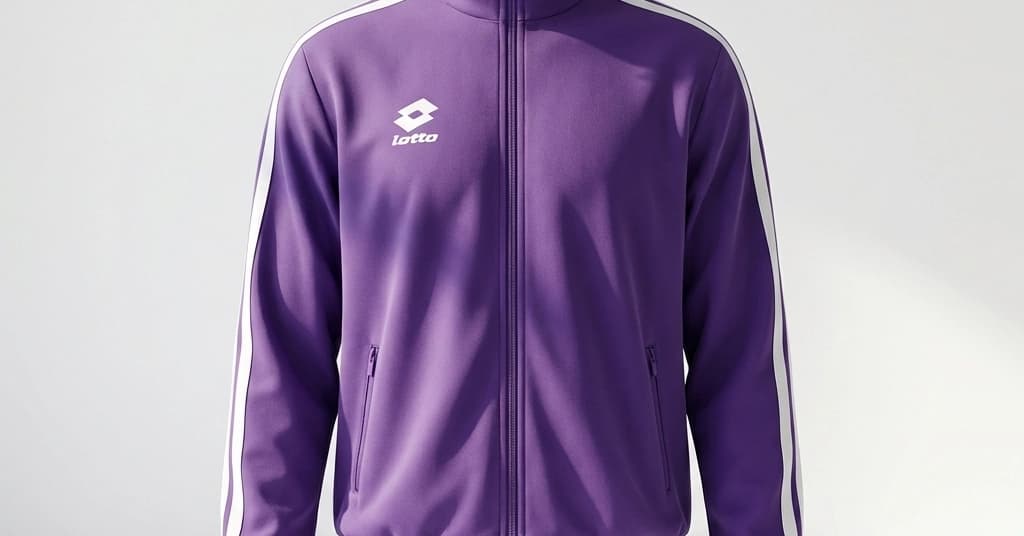
Beyond the Crop: Automating "Ghost Mannequin" Effects with Depth-Aware Inpainting
Dev.to

The $20/month AI subscription is gaslighting developers in emerging markets
Dev.to
A Claude Code hook that warns you before calling a low-trust MCP server
Dev.to


