
Detection of adversarial intent in Human-AI teams using LLMs
arXiv cs.LG / 3/24/2026
📰 NewsSignals & Early TrendsIdeas & Deep AnalysisModels & Research
Key Points
- The paper investigates how LLMs can detect adversarial or malicious intent within human-AI teams where agents assist with tasks like retrieval, programming, and decision-making.
- Using a dataset of multi-party human-AI conversations and outcomes from a real team over a 25-round horizon, the study frames malicious behavior detection as a problem based on interaction traces.
- The authors report that LLM-based supervisors can identify malicious behavior in real time and do so in a task-agnostic way without needing task-specific information.
- They find that the malicious behaviors of interest are difficult to catch using simple heuristics, implying that LLM-based defenders may improve robustness against certain attack classes.
Related Articles
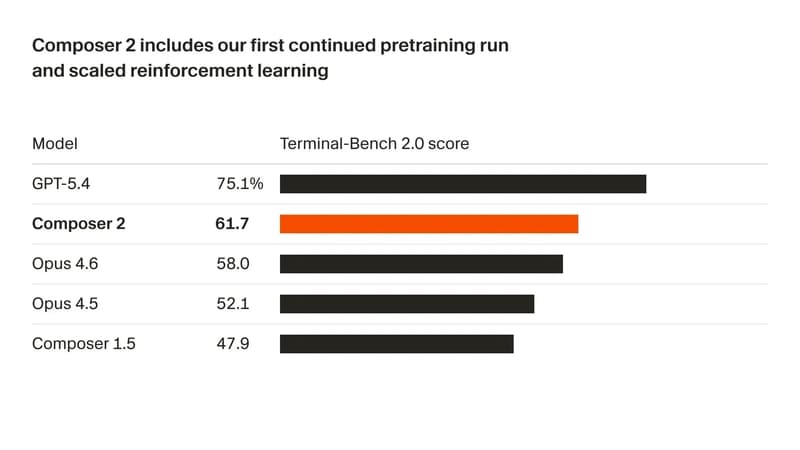
Composer 2: What is new and Compares with Claude Opus 4.6 & GPT-5.4
Dev.to
How UCP Breaks Your E-Commerce Tracking Stack: A Platform-by-Platform Analysis
Dev.to
AI Text Analyzer vs Asking Friends: Which Gives Better Perspective?
Dev.to
[D] Cathie wood claims ai productivity wave is starting, data shows 43% of ceos save 8+ hours weekly
Reddit r/MachineLearning

Microsoft hires top AI researchers from Allen Institute for AI for Suleyman's Superintelligence team
THE DECODER


