
Dual Perspectives in Emotion Attribution: A Generator-Interpreter Framework for Cross-Cultural Analysis of Emotion in LLMs
arXiv cs.CL / 4/1/2026
💬 OpinionIdeas & Deep AnalysisModels & Research
Key Points
- The paper argues that emotion attribution in LLMs should account for both the cultural background of emotion expression (generator) and the cultural context of interpretation (interpreter), rather than assuming universality.
- It introduces a Generator-Interpreter framework and evaluates six LLMs on emotion attribution using data spanning 15 countries.
- Results show that LLM performance differences vary by emotion type and cultural context, indicating that cross-cultural emotion modeling is not uniform across settings.
- The study finds generator–interpreter alignment effects, with the emotion generator’s country of origin having a stronger influence on performance than other factors.
- The authors call for culturally sensitive emotion modeling to improve robustness and fairness in LLM-based emotion understanding systems deployed globally.
Related Articles

Show HN: 1-Bit Bonsai, the First Commercially Viable 1-Bit LLMs
Dev.to

I Built an AI Agent That Can Write Its Own Tools When It Gets Stuck
Dev.to

Agent Self-Discovery: How AI Agents Find Their Own Wallets
Dev.to
[P] Federated Adversarial Learning
Reddit r/MachineLearning
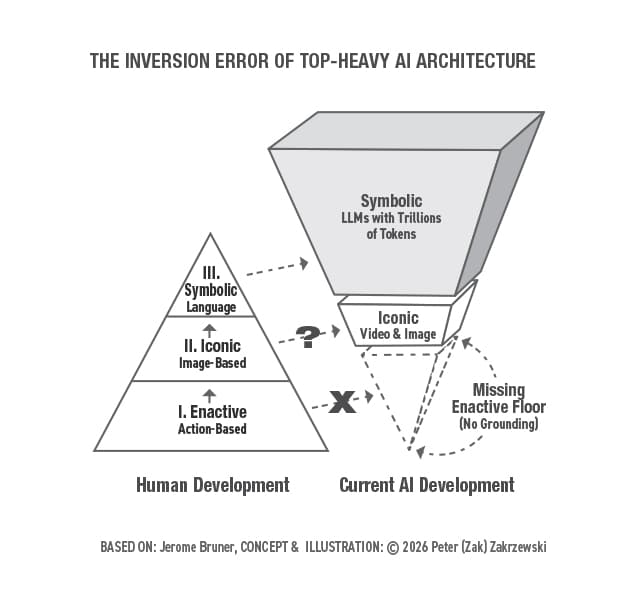
The Inversion Error: Why Safe AGI Requires an Enactive Floor and State-Space Reversibility
Towards Data Science


