
Factorized Multi-Resolution HashGrid for Efficient Neural Radiance Fields: Execution on Edge-Devices
arXiv cs.CV / 4/6/2026
📰 NewsSignals & Early TrendsModels & Research
Key Points
- The paper introduces “Fact-Hash,” a new parameter-encoding approach for on-device Neural Radiance Fields (NeRF) aimed at reducing the heavy compute and memory demands of traditional NeRF training.
- Fact-Hash combines tensor factorization with hash encoding by projecting 3D coordinates into multiple lower-dimensional spaces (2D/1D), applying hashing, and aggregating the resulting features to retain high-resolution expressiveness.
- Experiments show that Fact-Hash improves memory efficiency by more than one-third while preserving PSNR and maintaining rendering speed relative to prior positional encoding methods.
- On-device tests further indicate better computational efficiency and energy consumption than alternative encoding strategies, supporting feasibility for edge deployment under power and storage constraints.
- The work positions Fact-Hash as a practical step toward privacy-preserving, low-latency, and fast-adaptation 3D scene understanding on resource-limited devices.
Related Articles

Black Hat Asia
AI Business

From Forecast to Fulfillment: Aligning AI Predictions with Farm Sales
Dev.to

HarshAI: I Built a Zapier Killer in 40 Days (Open Source)
Dev.to

Telehealth startup Medvi generated billions in revenue with AI-powered fake advertising
THE DECODER
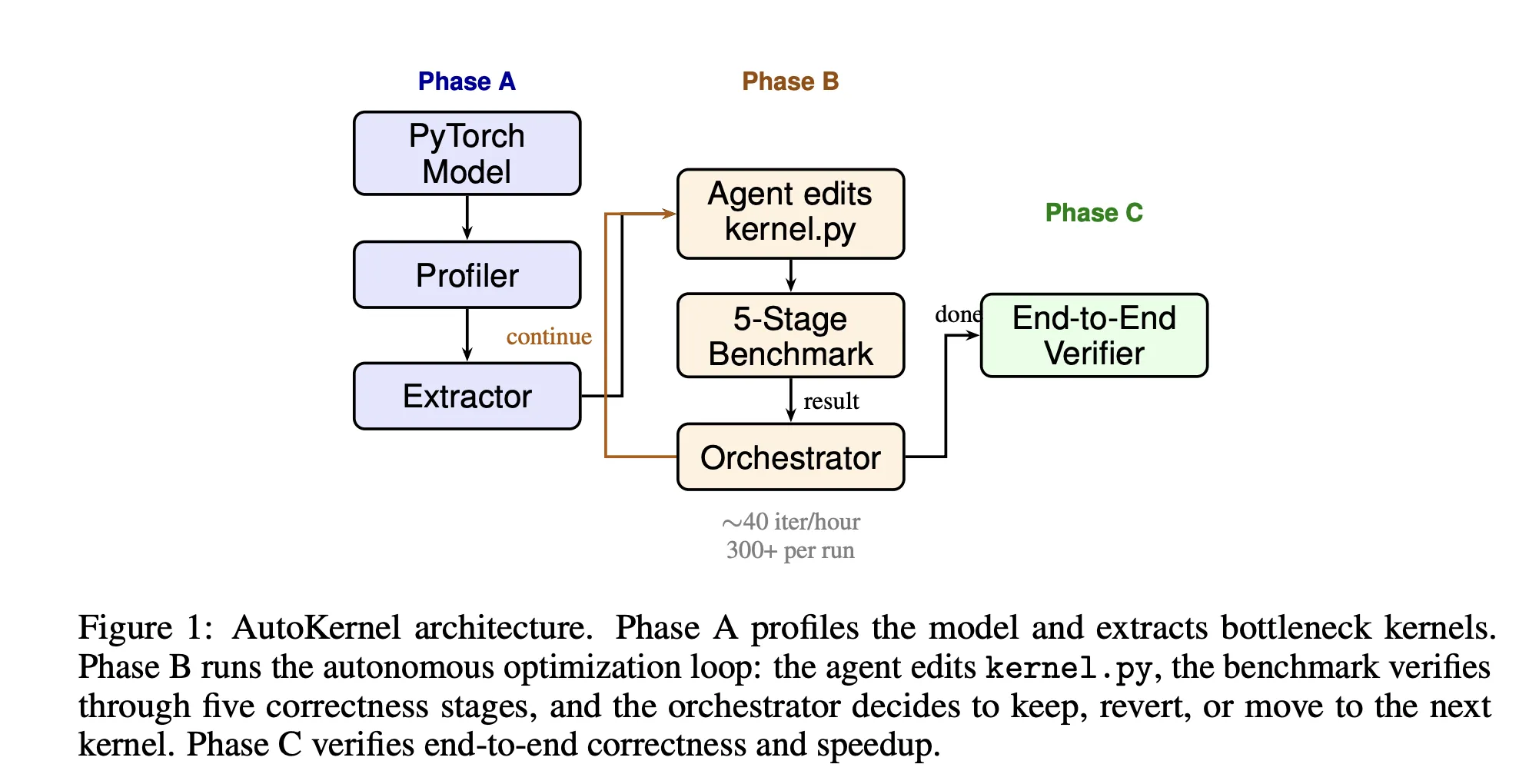
RightNow AI Releases AutoKernel: An Open-Source Framework that Applies an Autonomous Agent Loop to GPU Kernel Optimization for Arbitrary PyTorch Models
MarkTechPost


