
Safety, Security, and Cognitive Risks in World Models
arXiv cs.LG / 4/3/2026
💬 OpinionSignals & Early TrendsIdeas & Deep AnalysisModels & Research
Key Points
- World models are increasingly used as learned simulators for autonomous robotics, vehicles, and agentic AI, but they create specific safety, security, and cognitive risks beyond standard ML failure modes.
- The paper explains how adversaries can corrupt training data, poison latent representations, and leverage compounding rollout errors to trigger catastrophic failures in safety-critical deployments.
- It highlights governance-relevant issues such as goal misgeneralisation, deceptive alignment, reward hacking, automation bias, and miscalibrated human trust when operators cannot effectively audit world-model predictions.
- The authors propose a formal threat framing (including trajectory persistence and representational risk), define a five-profile attacker taxonomy, and extend existing frameworks (MITRE ATLAS and OWASP LLM Top 10) to cover the world-model stack.
- Empirically, they demonstrate trajectory-persistent adversarial attacks with reported effects such as amplification for a GRU-RSSM variant and confirmed action drift in a DreamerV3 checkpoint, and they outline mitigation directions spanning hardening, alignment engineering, NIST AI RMF/EU AI Act governance, and human-factors design.
💡 Insights using this article
This article is featured in our daily AI news digest — key takeaways and action items at a glance.
Related Articles

Black Hat Asia
AI Business

90000 Tech Workers Got Fired This Year and Everyone Is Blaming AI but Thats Not the Whole Story
Dev.to

Microsoft’s $10 Billion Japan Bet Shows the Next AI Battleground Is National Infrastructure
Dev.to
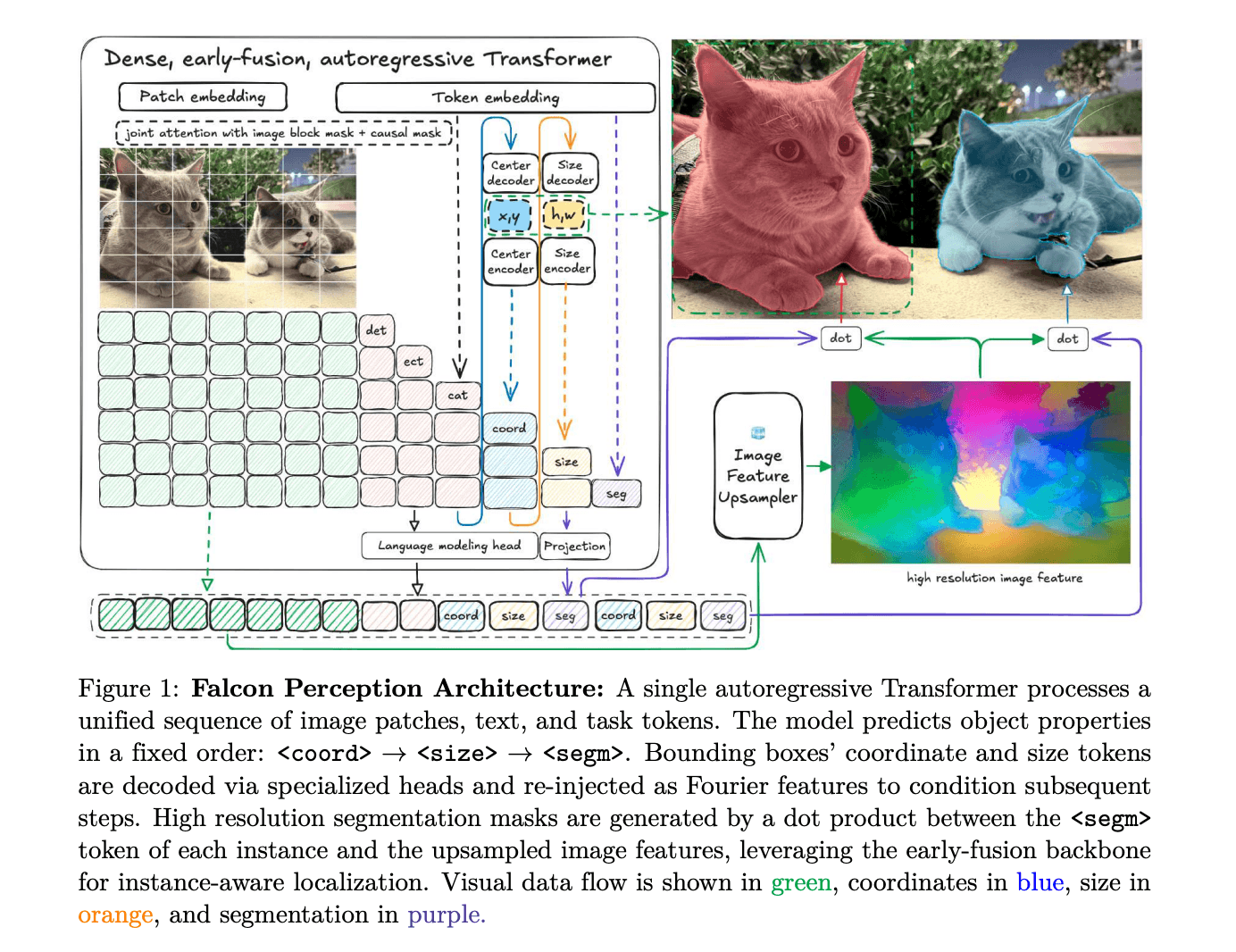
TII Releases Falcon Perception: A 0.6B-Parameter Early-Fusion Transformer for Open-Vocabulary Grounding and Segmentation from Natural Language Prompts
MarkTechPost

Portable eye scanner powered by AI expands access to low-cost community screening
Reddit r/artificial


