
Learning Selective LLM Autonomy from Copilot Feedback in Enterprise Customer Support Workflows
arXiv cs.CL / 4/28/2026
📰 NewsDeveloper Stack & InfrastructureIndustry & Market MovesModels & Research
Key Points
- The paper describes a deployed system that automates complete enterprise customer support workflows within a BPM platform using a selective (high-confidence) autonomy strategy.
- It achieves rapid scalability, reaching automation for a newly introduced process within two weeks by leveraging large-scale supervision from per-case UI interaction traces and low-overhead copilot feedback.
- The approach uses a staged deployment pipeline that trains a next-UI-action policy, learns a critic calibrated via copilot feedback to manage abstention, and then runs background automation only for steps deemed reliable.
- In operation, the system lets a single operator supervise multiple concurrent sessions, only interrupting when uncertainty is detected, and it includes monitoring plus safe fallbacks to protect production quality.
- In production results, the system automated 45% of support sessions and reduced average handling time by 39% without degrading support quality.
Related Articles

Black Hat USA
AI Business

Big Tech firms are accelerating AI investments and integration, while regulators and companies focus on safety and responsible adoption.
Dev.to
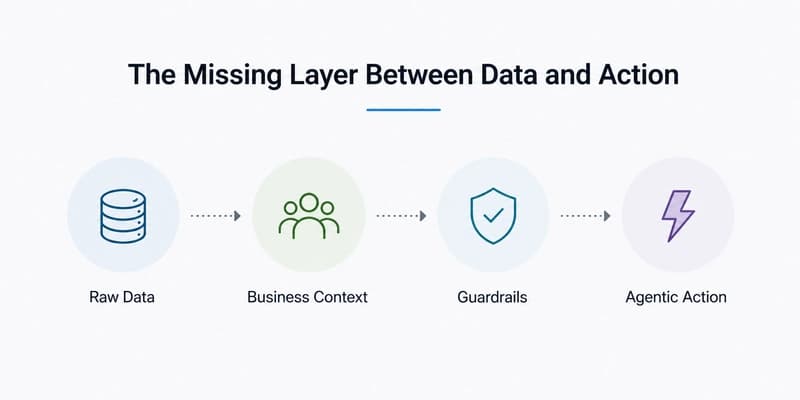
Everyone Wants AI Agents. Fewer Teams Are Ready for the Messy Business Context Behind Them
Dev.to
Free Registration & $20K Prize Pool: 2nd MLC-SLM Challenge 2026 on Multilingual Speech LLMs [N]
Reddit r/MachineLearning
How to Build Traceable and Evaluated LLM Workflows Using Promptflow, Prompty, and OpenAI
MarkTechPost


