
Rewarding the Scientific Process: Process-Level Reward Modeling for Agentic Data Analysis
arXiv cs.CL / 4/28/2026
📰 NewsDeveloper Stack & InfrastructureIdeas & Deep AnalysisModels & Research
Key Points
- The paper finds that existing general-domain Process Reward Models (PRMs) do not reliably supervise agentic data analysis, often missing “silent errors” and mispenalizing necessary exploration steps.
- To address this, it introduces DataPRM, a new environment-aware generative process reward model that actively probes intermediate execution states and detects silent failures.
- DataPRM uses a reflection-aware ternary reward strategy to separate correctable grounding errors from irrecoverable mistakes, improving alignment with real execution quality.
- The authors build a large training set (8K+ high-quality instances) with diversity-driven trajectory generation and knowledge-augmented step-level annotation, and show performance gains for downstream policy LLMs.
- Integrating DataPRM into reinforcement learning improves benchmarks substantially (e.g., 78.73% on DABench and 64.84% on TableBench), indicating process-level reward supervision is effective for data analysis agents.
Related Articles

Big Tech firms are accelerating AI investments and integration, while regulators and companies focus on safety and responsible adoption.
Dev.to
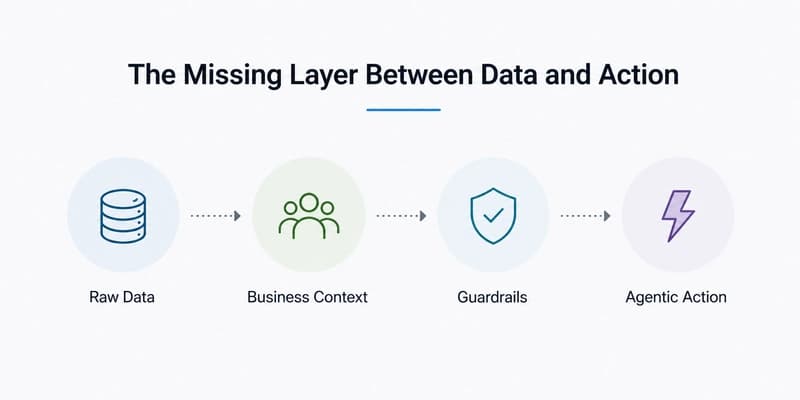
Everyone Wants AI Agents. Fewer Teams Are Ready for the Messy Business Context Behind Them
Dev.to
How to Build Traceable and Evaluated LLM Workflows Using Promptflow, Prompty, and OpenAI
MarkTechPost
AI 编程工具对比 2026:Claude Code vs Cursor vs Gemini CLI vs Codex
Dev.to

How I Improved My YouTube Shorts and Podcast Audio Workflow with AI Tools
Dev.to


