
PromptEcho: Annotation-Free Reward from Vision-Language Models for Text-to-Image Reinforcement Learning
arXiv cs.CV / 4/15/2026
📰 NewsSignals & Early TrendsIdeas & Deep AnalysisModels & Research
Key Points
- The paper introduces PromptEcho, an annotation-free reward construction method for text-to-image reinforcement learning that does not require training a reward model or collecting human preference data.
- PromptEcho uses a frozen vision-language model to compute token-level cross-entropy between the original prompt and the generated image, turning the VLM’s pretraining alignment knowledge into a deterministic reward signal.
- The authors report that PromptEcho is computationally efficient and improves automatically as stronger open-source VLMs become available, with reward quality scaling with VLM size.
- Experiments on two T2I models (Z-Image and QwenImage-2512) show substantial gains on the newly introduced DenseAlignBench (+26.8pp / +16.2pp net win rate) and consistent improvements across other benchmarks (GenEval, DPG-Bench, TIIFBench) without task-specific training.
- The work includes creation of DenseAlignBench (dense caption benchmark for prompt following) and plans to open-source the trained models and the benchmark.
Related Articles

Black Hat Asia
AI Business

The Complete Guide to Better Meeting Productivity with AI Note-Taking
Dev.to

5 Ways Real-Time AI Can Boost Your Sales Call Performance
Dev.to
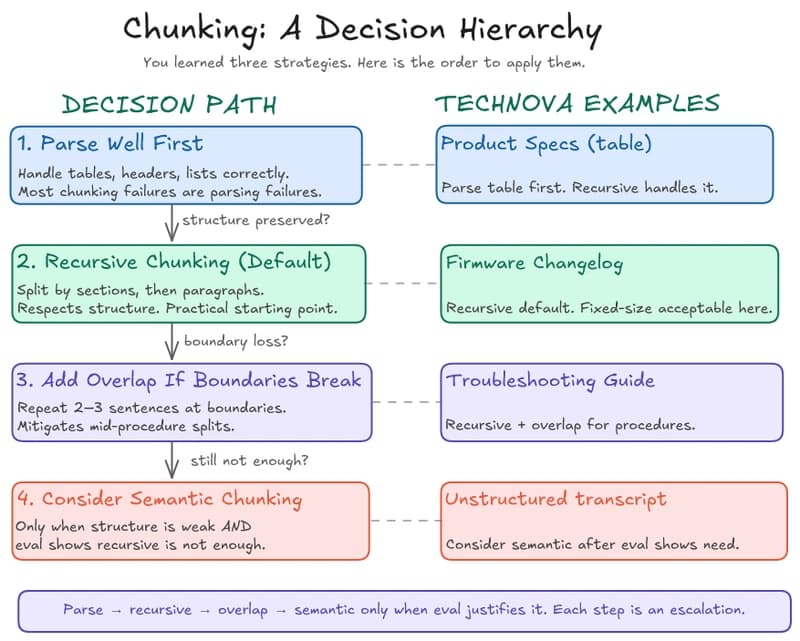
RAG in Practice — Part 4: Chunking, Retrieval, and the Decisions That Break RAG
Dev.to
Why dynamically routing multi-timescale advantages in PPO causes policy collapse (and a simple decoupled fix) [R]
Reddit r/MachineLearning


