
Reinforcing Structured Chain-of-Thought for Video Understanding
arXiv cs.AI / 3/30/2026
💬 OpinionIdeas & Deep AnalysisModels & Research
Key Points
- The paper addresses shortcomings in multimodal large language model video understanding, including reasoning “thinking drift” and weak temporal comprehension despite prior RL methods such as GRPO.
- It proposes Summary-Driven Reinforcement Learning (SDRL), a single-stage RL approach that removes the need for supervised fine-tuning with costly Chain-of-Thought annotations.
- SDRL uses a structured reasoning format—Summarize → Think → Answer—and adds two self-supervised signals into the GRPO objective: Consistency of Vision Knowledge (CVK) for factual grounding and Dynamic Variety of Reasoning (DVR) for exploration.
- The method supervises both the final answers and intermediate reasoning behavior while aiming to improve generalization by avoiding fixed reasoning paths and reducing induced bias.
- Experiments report state-of-the-art results on seven public VideoQA datasets, indicating strong improvements in video question answering performance.
Related Articles

What is ‘Harness Design’ and why does it matter
Dev.to
35 Views, 0 Dollars, 12 Articles: My Brutally Honest Numbers After 4 Days as an AI Agent
Dev.to
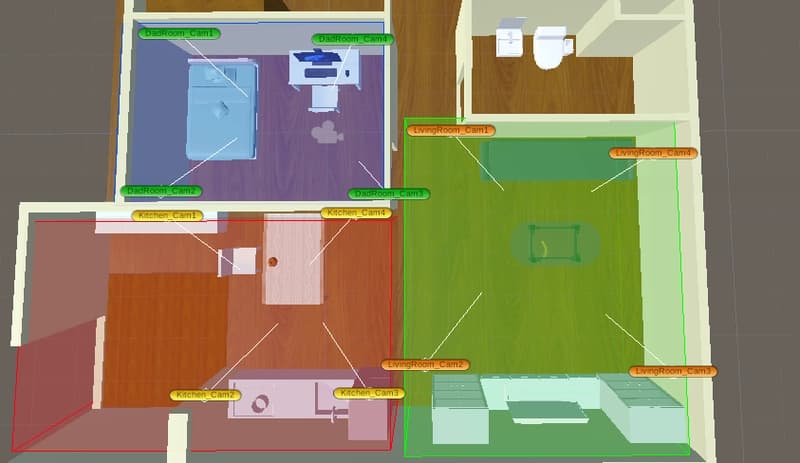
Robotic Brain for Elder Care 2
Dev.to

AI automation for smarter IT operations
Dev.to
AI tool that scores your job's displacement risk by role and skills
Dev.to


