
Stop Wandering: Efficient Vision-Language Navigation via Metacognitive Reasoning
arXiv cs.RO / 4/3/2026
💬 OpinionIdeas & Deep AnalysisModels & Research
Key Points
- Existing vision-language navigation (VLN) agents often make inefficient choices due to greedy frontier selection and weak (passive) spatial memory, causing behaviors like local oscillation and redundant revisits.
- The paper attributes these failures to missing metacognitive capabilities, such as monitoring exploration progress, diagnosing strategy breakdowns, and adapting when stuck.
- It introduces MetaNav, a training-free metacognitive navigation agent that combines a persistent 3D semantic spatial map, history-aware planning that discourages revisiting, and reflective correction to recover from stagnation.
- Reflective correction uses an LLM to produce corrective rules that guide better future frontier selection when the agent detects it is not making progress.
- Experiments on GOAT-Bench, HM3D-OVON, and A-EQA report state-of-the-art results and a 20.7% reduction in VLM queries, indicating improved robustness and efficiency from metacognitive reasoning.
Related Articles

90000 Tech Workers Got Fired This Year and Everyone Is Blaming AI but Thats Not the Whole Story
Dev.to

Microsoft’s $10 Billion Japan Bet Shows the Next AI Battleground Is National Infrastructure
Dev.to
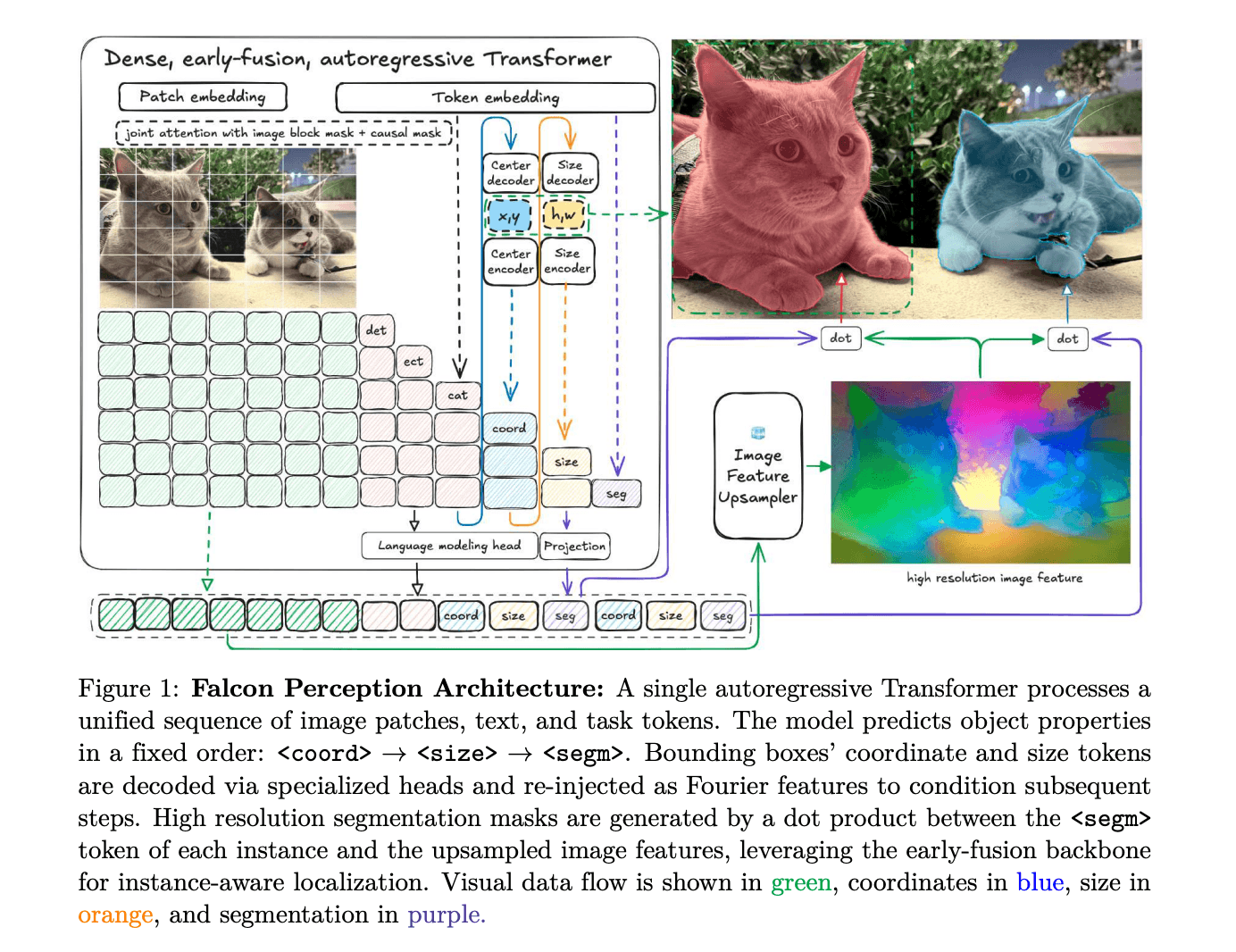
TII Releases Falcon Perception: A 0.6B-Parameter Early-Fusion Transformer for Open-Vocabulary Grounding and Segmentation from Natural Language Prompts
MarkTechPost

The house asked me a question
Dev.to

Precision Clip Selection: How AI Suggests Your In and Out Points
Dev.to


