
Universal Hypernetworks for Arbitrary Models
arXiv cs.LG / 4/3/2026
💬 OpinionIdeas & Deep AnalysisModels & Research
Key Points
- The paper introduces a Universal Hypernetwork (UHN), designed as a fixed generator that can produce weights for different target architectures using deterministic parameter, architecture, and task descriptors rather than being tied to a specific parameterization.
- By using this descriptor-based formulation, the authors aim to decouple the hypernetwork’s design from the target model’s architecture, enabling one generator to instantiate heterogeneous models across vision, graph, text, and formula-regression tasks.
- Experiments claim the same fixed UHN stays competitive with direct training across multiple benchmark types, while also supporting multi-model generalization within an architecture family and multi-task learning across heterogeneous models.
- The work further reports that UHN can generate models recursively in a stable way, including up to three intermediate generated UHNs before producing the final base model.
- The authors provide an implementation via GitHub, supporting reproducibility of the described approach and results.
Related Articles

90000 Tech Workers Got Fired This Year and Everyone Is Blaming AI but Thats Not the Whole Story
Dev.to

Microsoft’s $10 Billion Japan Bet Shows the Next AI Battleground Is National Infrastructure
Dev.to
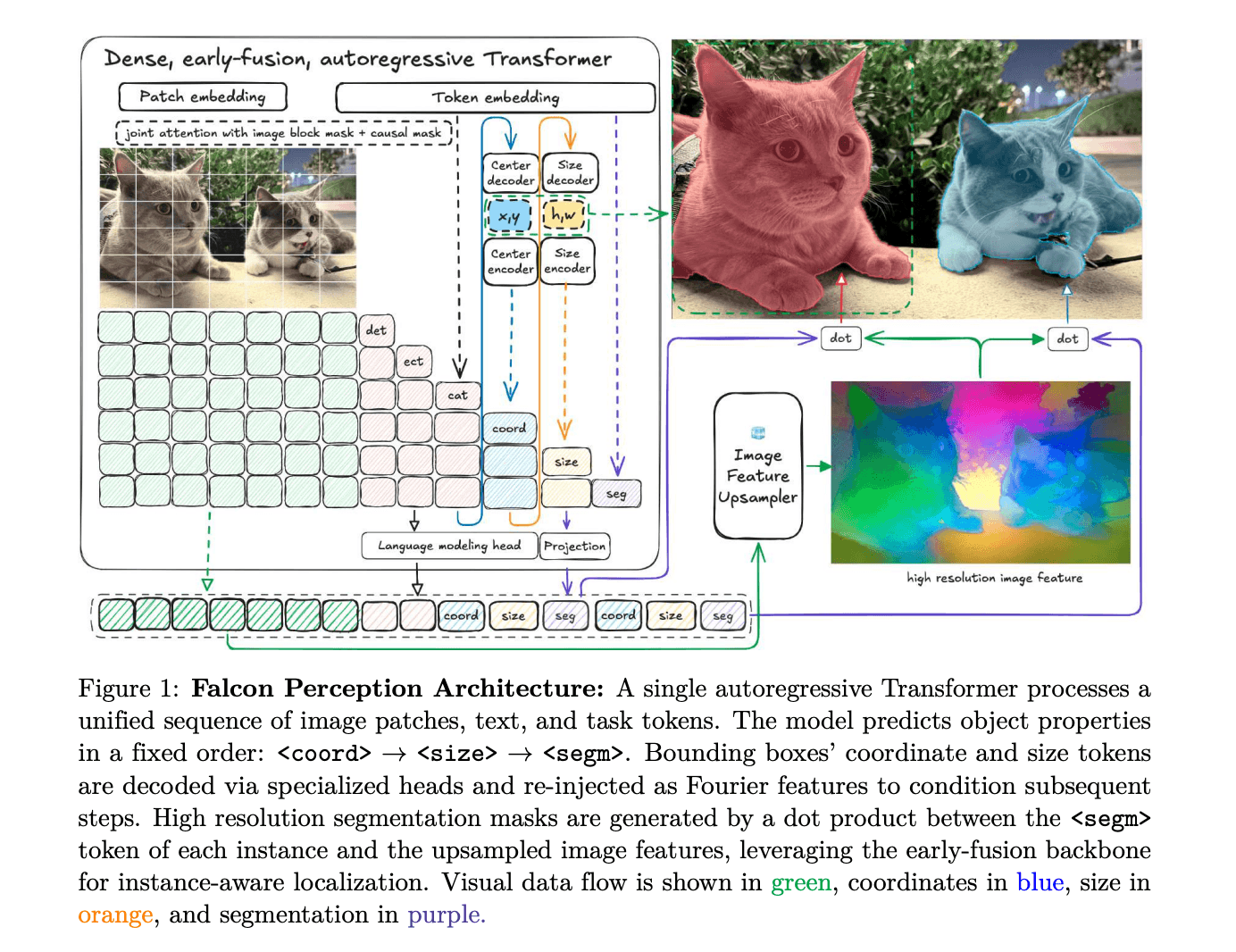
TII Releases Falcon Perception: A 0.6B-Parameter Early-Fusion Transformer for Open-Vocabulary Grounding and Segmentation from Natural Language Prompts
MarkTechPost

The house asked me a question
Dev.to

Precision Clip Selection: How AI Suggests Your In and Out Points
Dev.to


