
Chain of Modality: From Static Fusion to Dynamic Orchestration in Omni-MLLMs
arXiv cs.CV / 4/17/2026
📰 NewsModels & Research
Key Points
- The paper notes a common multimodal performance paradox where unimodal baselines can outperform multimodal joint inference in omni-modal LLMs.
- It attributes this fragility to “static fusion” architectures, highlighting two structural issues: positional bias in sequential inputs and alignment traps in interleaved formats that distort attention.
- It proposes Chain of Modality (CoM), an agentic framework that replaces passive concatenation with dynamic orchestration of fusion topologies.
- CoM adaptively switches among parallel, sequential, and interleaved pathways and splits cognition into “Direct-Decide” and “Reason-Decide” routes for faster perception and auditable reasoning.
- The approach reportedly works under training-free or data-efficient supervised fine-tuning (SFT) and yields more robust, consistent generalization across benchmarks.
Related Articles
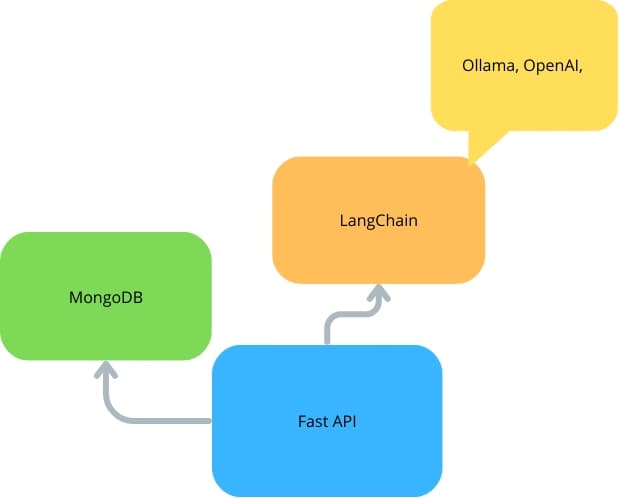
FastAPI With LangChain and MongoDB
Dev.to
![[2026] OpenTelemetry for LLM Observability — Self-Hosted Setup](/_next/image?url=https%3A%2F%2Fmedia2.dev.to%2Fdynamic%2Fimage%2Fwidth%3D1200%2Cheight%3D627%2Cfit%3Dcover%2Cgravity%3Dauto%2Cformat%3Dauto%2Fhttps%253A%252F%252Fdev-to-uploads.s3.amazonaws.com%252Fuploads%252Farticles%252Flu4b6ttuhur71z5gemm0.png&w=3840&q=75)
[2026] OpenTelemetry for LLM Observability — Self-Hosted Setup
Dev.to

The AI Education Product on Product Hunt Worth Watching
Dev.to

The joy and pain of training an LLM from scratch
Reddit r/LocalLLaMA

Did you know that you can use Qwen3.5-35B-A3B-Base as an instruction/reasoning Model?
Reddit r/LocalLLaMA


