
LAGS: Low-Altitude Gaussian Splatting with Groupwise Heterogeneous Graph Learning
arXiv cs.CV / 4/21/2026
📰 NewsDeveloper Stack & InfrastructureModels & Research
Key Points
- The paper introduces LAGS (Low-Altitude Gaussian Splatting), which reconstructs 3D scenes by aggregating aerial images from distributed drones, but highlights inefficiency in current resource allocation due to ignoring viewpoint-induced image diversity.
- It proposes GW-HGNN (groupwise heterogeneous graph neural network) to allocate drone image transmissions by modeling how different image groups non-uniformly contribute to reconstruction, balancing reconstruction fidelity against transmission cost.
- The method reframes LAGS losses and communication constraints as graph learning costs and performs dual-level message passing to learn the allocation policy.
- Experiments on real-world LAGS datasets show GW-HGNN achieves significantly better rendering quality than existing benchmarks on PSNR, SSIM, and LPIPS.
- The approach also cuts computational latency by roughly 100× versus the MOSEK solver, enabling millisecond-level inference for real-time deployment.
Related Articles

No Free Lunch Theorem — Deep Dive + Problem: Reverse Bits
Dev.to

Salesforce Headless 360: Run Your CRM Without a Browser
Dev.to

RAG Systems in Production: Building Enterprise Knowledge Search
Dev.to
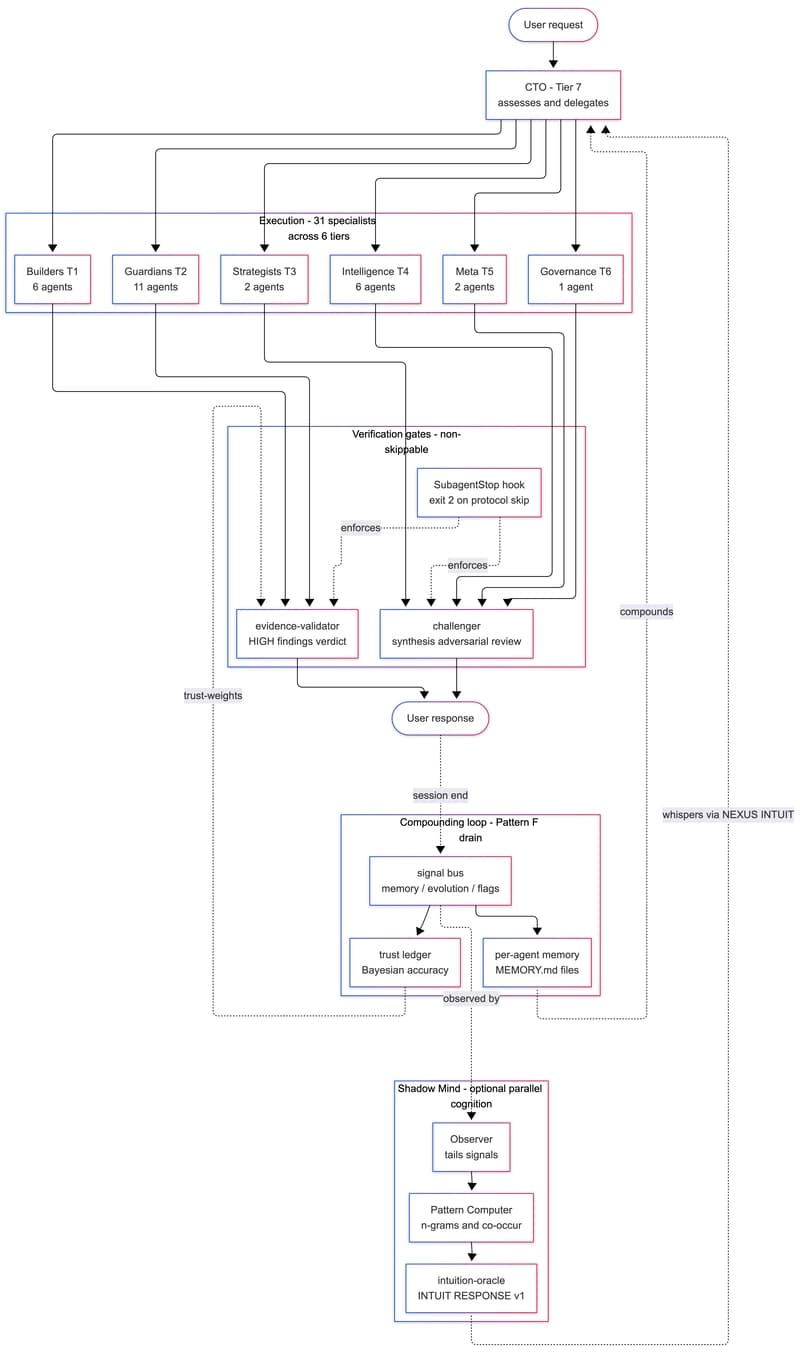
We Built a 31-Agent AI Team That Hires Itself, Critiques Itself, and Dreams
Dev.to
gpt-image-2 API: ship 2K AI images in Next.js for $0.21 (2026)
Dev.to


