
ADAPT: Benchmarking Commonsense Planning under Unspecified Affordance Constraints
arXiv cs.AI / 4/17/2026
📰 NewsModels & Research
Key Points
- The paper argues that embodied agents should account for unexpected real-world conditions and missing affordance information rather than simply executing instructions.
- It introduces DynAfford, a benchmark for dynamic environments where object affordances can change over time and are not specified in the instruction.
- The benchmark requires agents to perceive object states, infer implicit preconditions, and adapt their actions accordingly.
- To support this, the authors propose ADAPT, a plug-and-play module that adds explicit affordance reasoning to existing planners.
- Experiments show that ADAPT improves robustness and task success in both seen and unseen settings, and that a domain-adapted, LoRA-finetuned vision-language model can outperform GPT-4o for affordance inference.
Related Articles
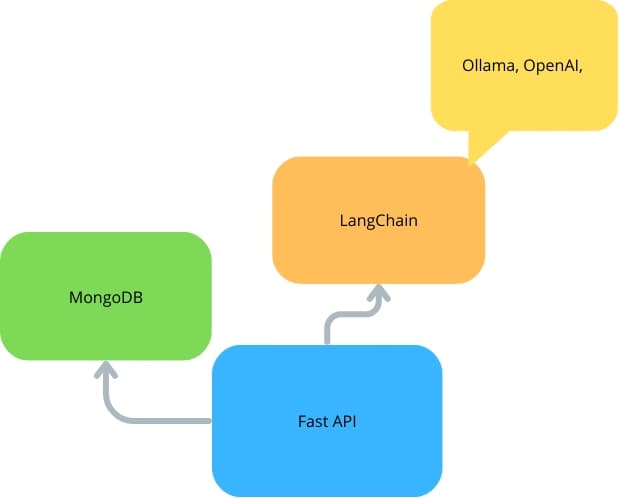
FastAPI With LangChain and MongoDB
Dev.to
![[2026] OpenTelemetry for LLM Observability — Self-Hosted Setup](/_next/image?url=https%3A%2F%2Fmedia2.dev.to%2Fdynamic%2Fimage%2Fwidth%3D1200%2Cheight%3D627%2Cfit%3Dcover%2Cgravity%3Dauto%2Cformat%3Dauto%2Fhttps%253A%252F%252Fdev-to-uploads.s3.amazonaws.com%252Fuploads%252Farticles%252Flu4b6ttuhur71z5gemm0.png&w=3840&q=75)
[2026] OpenTelemetry for LLM Observability — Self-Hosted Setup
Dev.to

The AI Education Product on Product Hunt Worth Watching
Dev.to

The joy and pain of training an LLM from scratch
Reddit r/LocalLLaMA

Did you know that you can use Qwen3.5-35B-A3B-Base as an instruction/reasoning Model?
Reddit r/LocalLLaMA


