
Beyond Independent Frames: Latent Attention Masked Autoencoders for Multi-View Echocardiography
arXiv cs.CV / 4/17/2026
📰 NewsModels & Research
Key Points
- The paper proposes LAMAE (Latent Attention Masked Autoencoder), a foundation-model architecture designed to handle echocardiography’s sparse, heterogeneous, multi-view spatiotemporal structure.
- Unlike prior MAE approaches that treat frames or short clips independently, LAMAE introduces latent attention to exchange information across both time frames and different views in latent space.
- LAMAE is pretrained on MIMIC-IV-ECHO, leveraging real-world clinical variability via a large, uncurated dataset, and is evaluated for downstream tasks.
- The authors report early results for predicting ICD-10 codes directly from echocardiography videos, and show adult-learned representations can transfer effectively to pediatric cohorts.
- Overall, the work argues that adding structural priors—specifically multi-view attention—improves robustness and transferability of learned medical-imaging representations.
Related Articles
langchain-anthropic==1.4.1
LangChain Releases

Talk to Your Favorite Game Characters! Mantella Brings AI to Skyrim and Fallout 4 NPCs
Dev.to
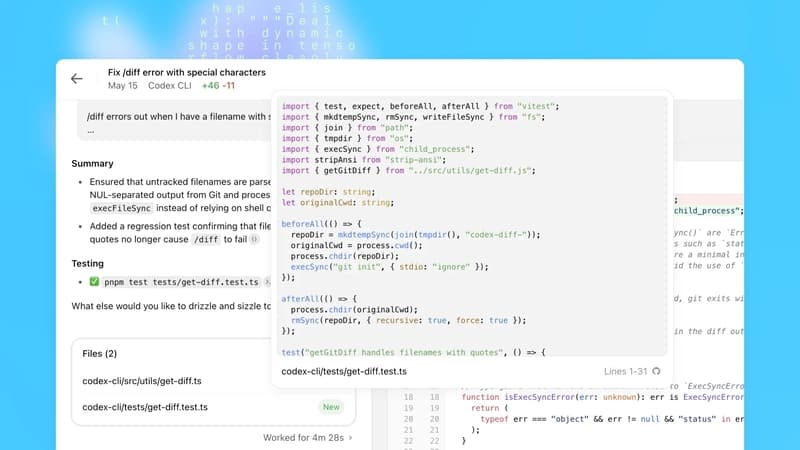
OpenAI Codex Update Adds macOS Agent, Browser, Memory; 3M Weekly Users
Dev.to
1.14.2
CrewAI Releases

Should my enterprise AI agent do that? NanoClaw and Vercel launch easier agentic policy setting and approval dialogs across 15 messaging apps
VentureBeat


