
Towards Lawful Autonomous Driving: Deriving Scenario-Aware Driving Requirements from Traffic Laws and Regulations
arXiv cs.AI / 4/28/2026
📰 NewsDeveloper Stack & InfrastructureModels & Research
Key Points
- The paper argues that autonomous vehicles must follow traffic laws, but current formal-logic approaches for encoding compliance are costly and difficult to scale.
- It proposes using large language models to derive driving requirements from traffic regulations, while addressing the risk that LLMs may retrieve or apply the wrong provisions without scenario grounding.
- The authors introduce a scenario-aware pipeline that grounds LLM reasoning in a traffic-scenario taxonomy using node-wise anchors with hierarchical semantics.
- Experiments on Chinese traffic laws and the OnSite dataset (5,897 scenarios) show a 29.1% improvement in law–scenario matching and large gains in the accuracy of both mandatory and prohibitive requirement derivation.
- The work includes an implementation toward real-world use, demonstrating a law-compliance layer for AV navigation and an onboard real-time compliance monitor for field testing.
Related Articles
LLMs will be a commodity
Reddit r/artificial

What it feels like to have to have Qwen 3.6 or Gemma 4 running locally
Reddit r/LocalLLaMA
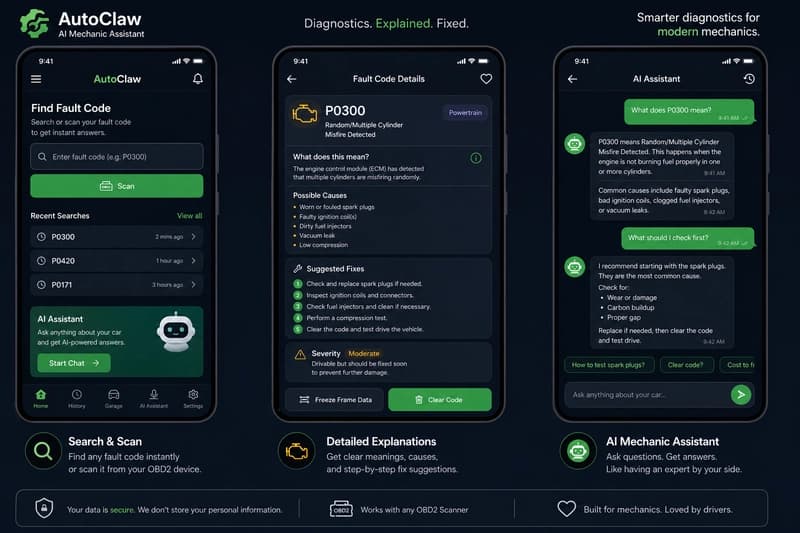
From Fault Codes to Smart Fixes: How Google Cloud NEXT ’26 Inspired My AI Mechanic Assistant
Dev.to

Dex lands $5.3M to grow its AI-driven talent matching platform
Tech.eu

7 OpenClaw Money-Making Cases in One Week — and the Hidden Cost Problem Behind Them
Dev.to


