
ARGen: Affect-Reinforced Generative Augmentation towards Vision-based Dynamic Emotion Perception
arXiv cs.CV / 4/15/2026
📰 NewsSignals & Early TrendsIdeas & Deep AnalysisModels & Research
Key Points
- The paper introduces ARGen, a two-stage framework for improving dynamic facial expression/emotion recognition in unconstrained (“in the wild”) settings where data is scarce and emotions follow long-tail distributions.
- ARGen uses Affective Semantic Injection (ASI) to align affective knowledge by leveraging facial Action Units and retrieval-augmented prompt generation with large visual-language models to produce interpretable emotional priors.
- It then applies Adaptive Reinforcement Diffusion (ARD), a text-conditioned image-to-video diffusion approach enhanced with reinforcement learning to improve temporal consistency via inter-frame conditional guidance.
- A multi-objective reward function jointly optimizes generated expression naturalness, facial integrity, and generative efficiency, targeting both synthesis quality and downstream recognition accuracy.
- Experiments reportedly validate that ARGen boosts both generation fidelity and recognition performance, offering a generally applicable, interpretable generative augmentation paradigm for affective/vision-based emotion perception.
Related Articles

Black Hat Asia
AI Business

The Complete Guide to Better Meeting Productivity with AI Note-Taking
Dev.to

5 Ways Real-Time AI Can Boost Your Sales Call Performance
Dev.to
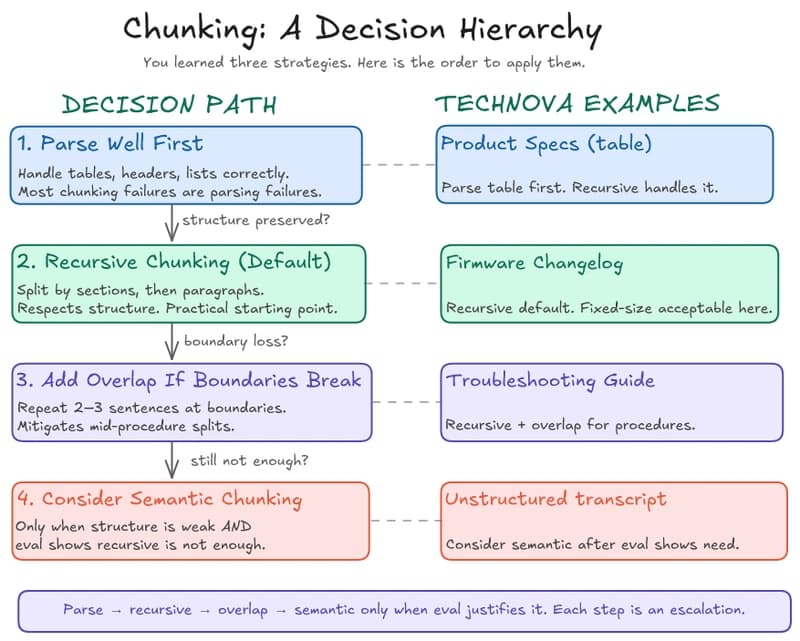
RAG in Practice — Part 4: Chunking, Retrieval, and the Decisions That Break RAG
Dev.to
Why dynamically routing multi-timescale advantages in PPO causes policy collapse (and a simple decoupled fix) [R]
Reddit r/MachineLearning


