
Epileptic Seizure Detection in Separate Frequency Bands Using Feature Analysis and Graph Convolutional Neural Network (GCN) from Electroencephalogram (EEG) Signals
arXiv cs.AI / 4/2/2026
💬 OpinionSignals & Early TrendsIdeas & Deep AnalysisModels & Research
Key Points
- The paper proposes a frequency-aware epileptic seizure detection framework that first decomposes EEG into five bands (delta, theta, alpha, lower beta, higher beta) and extracts eleven discriminative features per band.
- It uses a graph convolutional neural network (GCN) to capture spatial relationships among EEG electrodes by modeling each electrode as a node in a graph.
- Experiments on the CHB-MIT scalp EEG dataset report very high band-specific and broadband detection performance, with an overall broadband accuracy of 99.01%.
- The study finds that mid-frequency bands show strong discriminative capability and that seizure patterns vary by frequency band, aiming to improve both interpretability and neurophysiological relevance versus conventional broadband methods.
Related Articles

Black Hat Asia
AI Business
v5.5.0
Transformers(HuggingFace)Releases
Bonsai (PrismML's 1 bit version of Qwen3 8B 4B 1.7B) was not an aprils fools joke
Reddit r/LocalLLaMA
Big Tech firms are accelerating AI investments and integration, while regulators and companies focus on safety and responsible adoption.
Dev.to
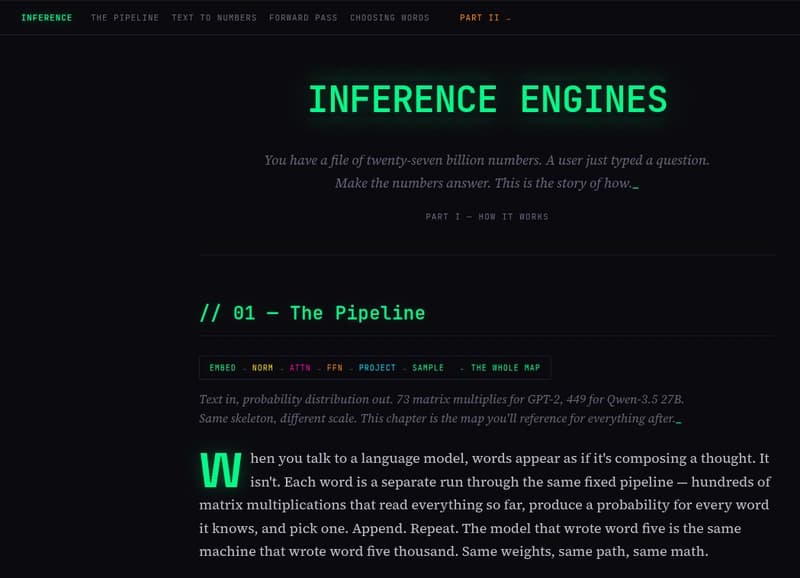
Inference Engines - A visual deep dive into the layers of an LLM
Dev.to


