
Asymptotic-Preserving Neural Networks for Viscoelastic Parameter Identification in Multiscale Blood Flow Modeling
arXiv cs.LG / 4/9/2026
📰 NewsSignals & Early TrendsIdeas & Deep AnalysisModels & Research
Key Points
- The paper proposes Asymptotic-Preserving Neural Networks to identify viscoelastic parameters in a one-dimensional multiscale blood flow model that governs arterial wall deformation under pulsatile pressure.
- By embedding the governing physical principles directly into the learning process, the method jointly infers viscoelastic parameters and reconstructs the time evolution of vessel state variables.
- The approach estimates pressure waveforms in segments lacking direct pressure measurements using patient-specific Doppler ultrasound inputs (cross-sectional area and velocity), rather than requiring invasive measurements.
- The authors report effectiveness across both synthetic experiments and patient-specific numerical simulations, demonstrating improved practical applicability of the multiscale model for cardiovascular parameter estimation.
Related Articles

Black Hat Asia
AI Business
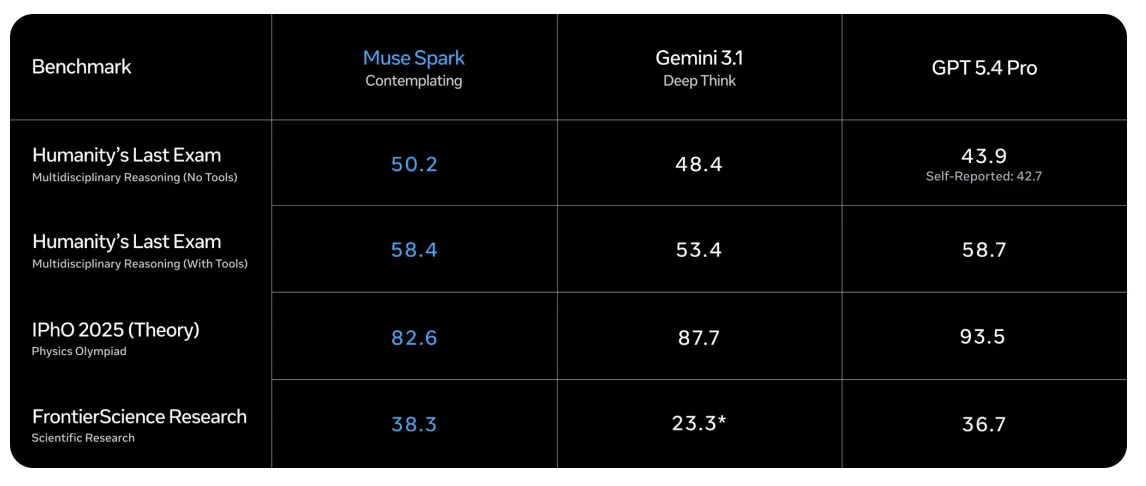
Meta Superintelligence Lab Releases Muse Spark: A Multimodal Reasoning Model With Thought Compression and Parallel Agents
MarkTechPost

Chatbots are great at manipulating people to buy stuff, Princeton boffins find
The Register
I tested and ranked every ai companion app I tried and here's my honest breakdown
Reddit r/artificial

Big Tech firms are accelerating AI investments and integration, while regulators and companies focus on safety and responsible adoption.
Dev.to


