
Counterfactual Credit Policy Optimization for Multi-Agent Collaboration
arXiv cs.AI / 3/24/2026
📰 NewsSignals & Early TrendsIdeas & Deep AnalysisModels & Research
Key Points
- The paper introduces Counterfactual Credit Policy Optimization (CCPO) to address reinforcement learning credit assignment problems in collaborative multi-agent LLM systems with shared rewards.
- CCPO estimates each agent’s marginal contribution using counterfactual trajectories that remove an agent’s contribution, producing agent-specific learning signals and reducing update variance and free-riding.
- It further improves stability across heterogeneous tasks and data distributions via a global-history-aware advantage normalization calibrated with global rollout statistics.
- Experiments on sequential Think–Reason and multi-agent voting collaboration topologies show CCPO mitigates free-riding and outperforms strong multi-agent RL baselines on mathematical and logical reasoning benchmarks.
- The authors provide an implementation at the linked GitHub repository for applying the CCPO framework in collaborative LLM training.
Related Articles
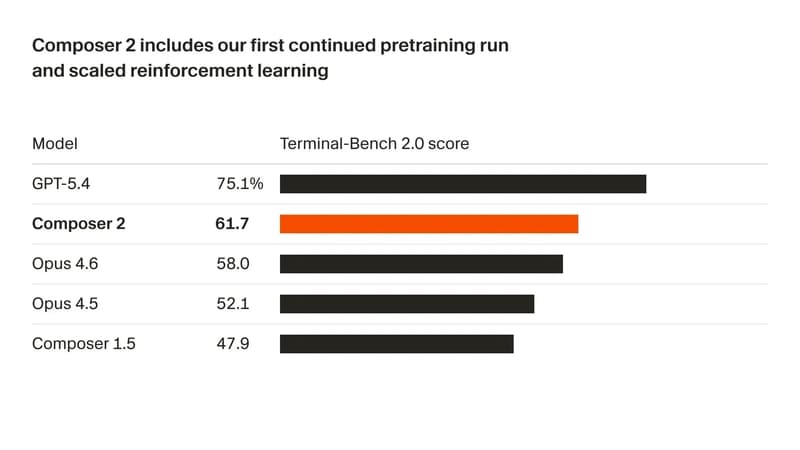
Composer 2: What is new and Compares with Claude Opus 4.6 & GPT-5.4
Dev.to
How UCP Breaks Your E-Commerce Tracking Stack: A Platform-by-Platform Analysis
Dev.to
AI Text Analyzer vs Asking Friends: Which Gives Better Perspective?
Dev.to
[D] Cathie wood claims ai productivity wave is starting, data shows 43% of ceos save 8+ hours weekly
Reddit r/MachineLearning

Microsoft hires top AI researchers from Allen Institute for AI for Suleyman's Superintelligence team
THE DECODER


