
DynaTab: Dynamic Feature Ordering as Neural Rewiring for High-Dimensional Tabular Data
arXiv cs.LG / 5/6/2026
📰 NewsIdeas & Deep AnalysisModels & Research
Key Points
- The paper introduces DynaTab, an architecture for high-dimensional tabular data that enables permutation-sensitive deep learning by dynamically reordering features.
- DynaTab uses a lightweight criterion to predict whether feature permutation is beneficial, based on the dataset’s intrinsic complexity.
- It applies a neural-rewiring-inspired algorithm to reorder features and then processes them with a compact order-aware stack using positional embeddings, importance-based gating, and masked attention.
- The method is trained end-to-end with dedicated losses (dynamic feature ordering and dispersion) and shows statistically significant improvements, especially on high-dimensional datasets.
- DynaTab is benchmarked against 45 state-of-the-art baselines across 36 real-world tabular datasets, positioning it as a new paradigm for high-dimensional tabular deep learning.
Related Articles

Top 10 Free AI Tools for Students in 2026: The Ultimate Study Guide
Dev.to

AI as Your Contingency Co-Pilot: Automating Wedding Day 'What-Ifs'
Dev.to
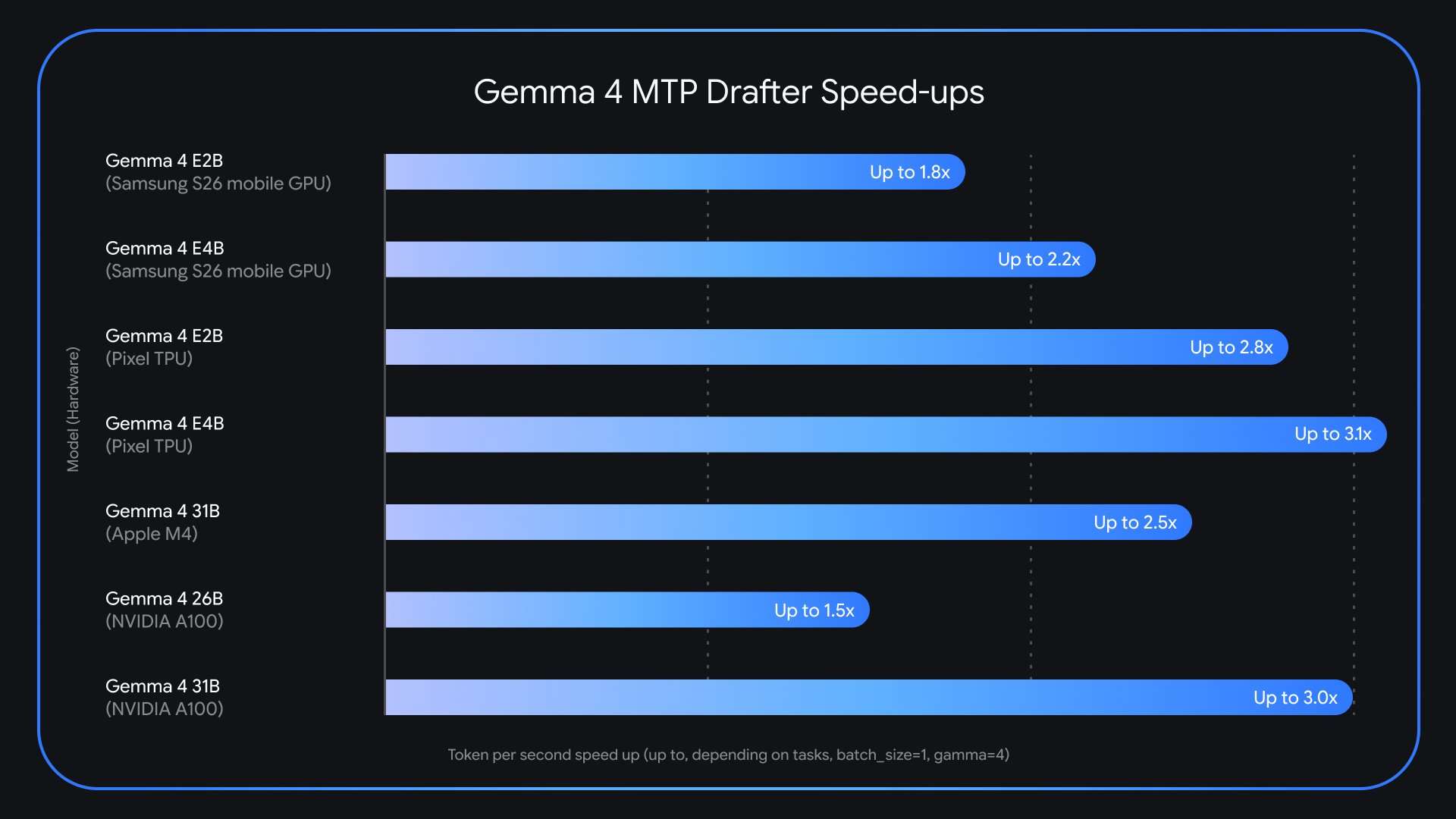
Google AI Releases Multi-Token Prediction (MTP) Drafters for Gemma 4: Delivering Up to 3x Faster Inference Without Quality Loss
MarkTechPost
When Claude Hallucinates in Court: The Latham & Watkins Incident and What It Means for Attorney Liability
MarkTechPost
Solidity LM surpasses Opus
Reddit r/LocalLLaMA


