
Decoupling Distance and Networks: Hybrid Graph Attention-Geostatistical Methods for Spatio-temporal Risk Mapping
arXiv stat.ML / 4/15/2026
💬 OpinionIdeas & Deep AnalysisModels & Research
Key Points
- The paper proposes a hybrid spatio-temporal risk mapping framework that combines a dynamic Graph Attention Network (GATv2) with a latent Gaussian spatial process from model-based geostatistics (MBG) to capture both relational and distance-driven dependencies.
- In evaluation, GATv2 learns complex nonlinear interactions from graph structure but can leave residual spatial autocorrelation unmodeled, leading to miscalibrated predictive uncertainty.
- Classic geostatistical models offer coherent uncertainty quantification via structured covariance functions but are limited by linear predictor assumptions and by relying primarily on Euclidean distance.
- The integrated attention + probabilistic spatial random field approach improves predictive accuracy and yields more realistic uncertainty quantification in both controlled simulations and an applied malaria prevalence study.
Related Articles
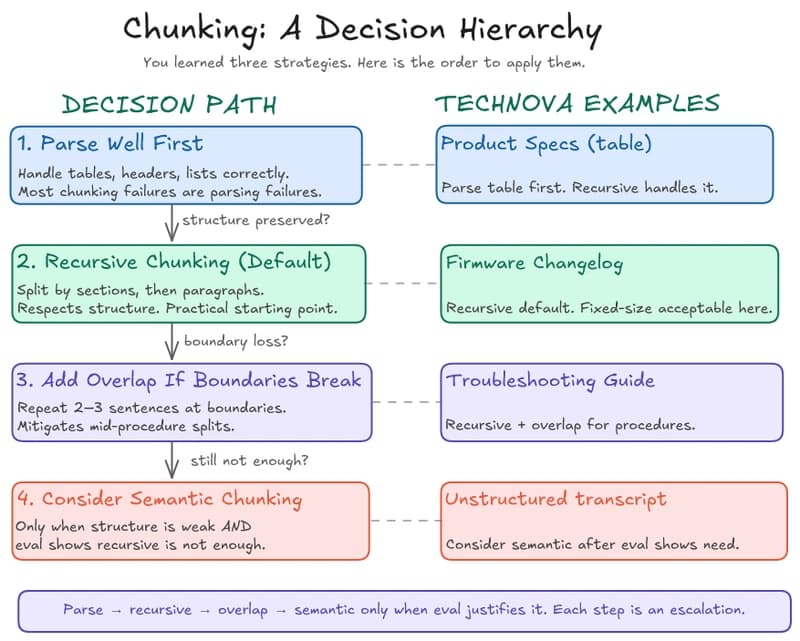
RAG in Practice — Part 4: Chunking, Retrieval, and the Decisions That Break RAG
Dev.to
Why dynamically routing multi-timescale advantages in PPO causes policy collapse (and a simple decoupled fix) [R]
Reddit r/MachineLearning

How AI Interview Assistants Are Changing Job Preparation in 2026
Dev.to

Consciousness in Artificial Intelligence: Insights from the Science ofConsciousness
Dev.to

NEW PROMPT INJECTION
Dev.to


