
Incentives, Equilibria, and the Limits of Healthcare AI: A Game-Theoretic Perspective
arXiv cs.AI / 4/1/2026
💬 OpinionIdeas & Deep AnalysisModels & Research
Key Points
- The paper examines why healthcare AI deployments may fail to deliver expected system-level improvements when incentives and risk allocation are not changed.
- It classifies AI technologies into three archetypes—effort reduction, increased observability, and mechanism-level incentive change—and argues each affects system behavior differently.
- Using a stylized inpatient capacity signaling scenario with minimal game-theoretic reasoning, it concludes that task optimization alone typically cannot alter outcomes if incentives remain unchanged.
- The analysis suggests that only interventions reshaping risk allocation can plausibly change stable equilibria in healthcare systems, with direct implications for leadership decisions and procurement strategies.
Related Articles

Show HN: 1-Bit Bonsai, the First Commercially Viable 1-Bit LLMs
Dev.to
I Built an AI Agent That Can Write Its Own Tools When It Gets Stuck
Dev.to

Agent Self-Discovery: How AI Agents Find Their Own Wallets
Dev.to
[P] Federated Adversarial Learning
Reddit r/MachineLearning
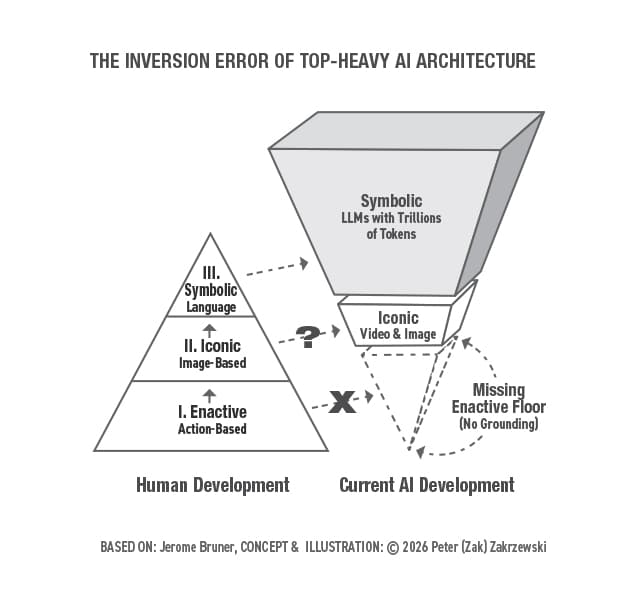
The Inversion Error: Why Safe AGI Requires an Enactive Floor and State-Space Reversibility
Towards Data Science


