
Remask, Don't Replace: Token-to-Mask Refinement in Masked Diffusion Language Models
arXiv cs.CL / 4/22/2026
📰 NewsModels & Research
Key Points
- The paper analyzes masked diffusion language models that use Token-to-Token (T2T) editing to overwrite confidently wrong tokens, and identifies three structural failure modes in this rule.
- It proposes Token-to-Mask (T2M) remasking, which resets a suspect position back to the mask state so the model can re-predict it during the next denoising step using an in-distribution context.
- T2M is training-free, changes only the editing procedure, adds no new parameters, and includes three detection heuristics to decide when to trigger remasking.
- Experiments across eight benchmarks show T2M improves exact token-level accuracy, with its biggest gain being +5.92 points on CMATH by repairing a substantial share of “last-mile” corrupted final answers.
- The authors also provide a theoretical rationale for why a mask conditioning signal is more effective than conditioning on an erroneous committed token.
Related Articles
No Free Lunch Theorem — Deep Dive + Problem: Reverse Bits
Dev.to

Salesforce Headless 360: Run Your CRM Without a Browser
Dev.to
RAG Systems in Production: Building Enterprise Knowledge Search
Dev.to
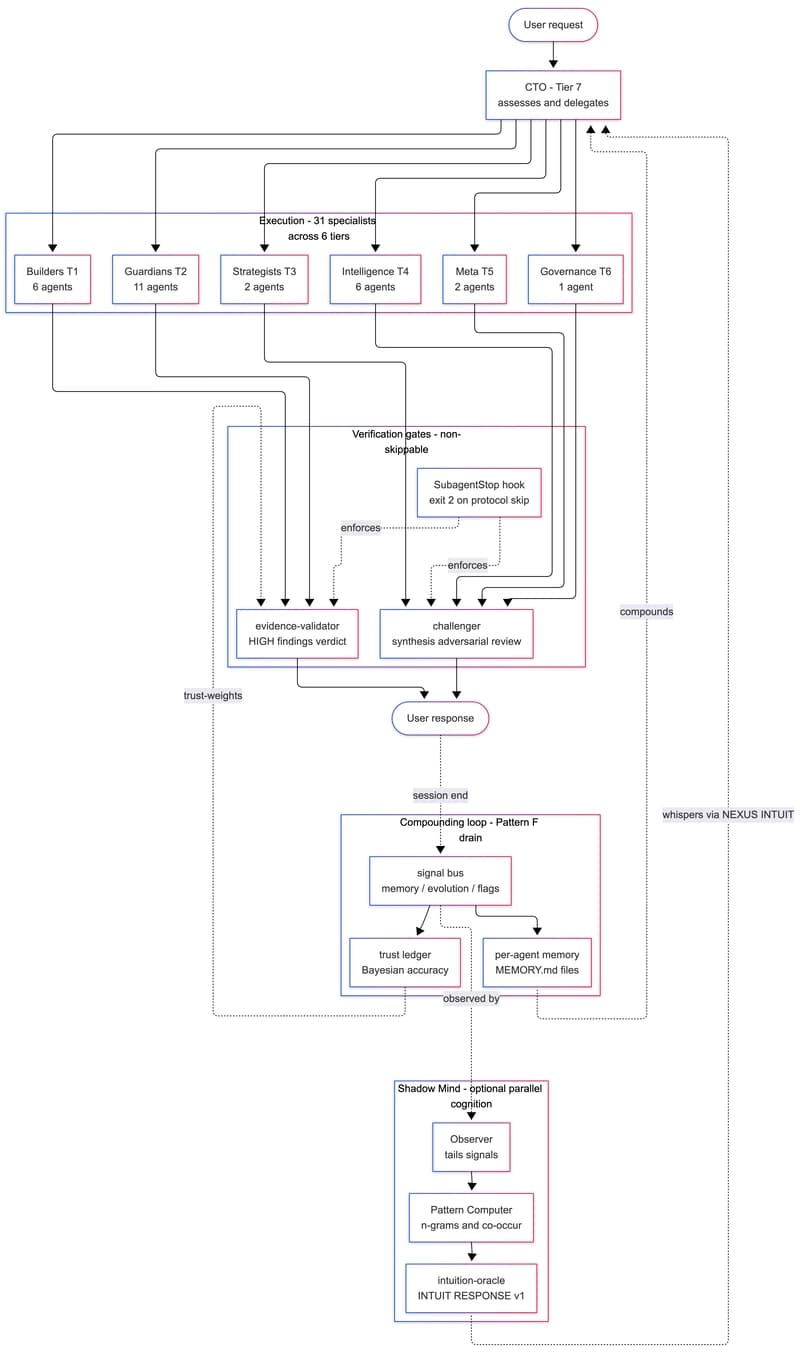
We Built a 31-Agent AI Team That Hires Itself, Critiques Itself, and Dreams
Dev.to
gpt-image-2 API: ship 2K AI images in Next.js for $0.21 (2026)
Dev.to


