
Online library learning in human visual puzzle solving
arXiv cs.AI / 3/25/2026
💬 OpinionSignals & Early TrendsIdeas & Deep AnalysisModels & Research
Key Points
- The study investigates how people learn and reuse intermediate “helpers” (reusable abstractions) while solving increasingly difficult visual puzzles with uncertainty about future tasks.
- In early trials, participants created many helpers to maximize completeness, but over time they became more selective and efficient in using helpers as they gained experience.
- Access to these learned helpers expanded what participants could solve, enabling solutions that were difficult or impossible without reuse.
- Computational modeling suggests effort and decision time rise with an estimated search-space size from a program-induction “library learning” model, while raw program length mainly predicts failure rather than effort.
- The findings support online library learning as a core mechanism for flexible abstraction building, refinement, and reuse as task demands grow.
広告
Related Articles

Got My 39-Agent System Audited Live. Here's What the Maturity Scorecard Revealed.
Dev.to

The Redline Economy
Dev.to

$500 GPU outperforms Claude Sonnet on coding benchmarks
Dev.to

From Scattershot to Sniper: AI for Hyper-Personalized Media Lists
Dev.to
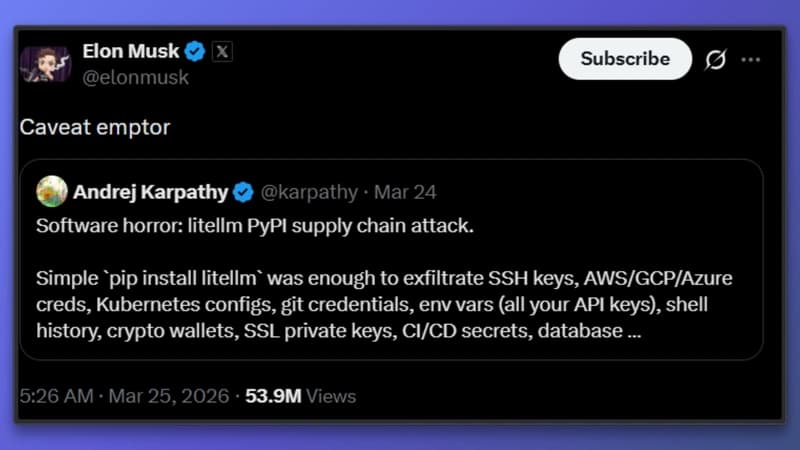
The LiteLLM Supply Chain Attack: A Wake-Up Call for AI Infrastructure
Dev.to


