
TR-ICRL: Test-Time Rethinking for In-Context Reinforcement Learning
arXiv cs.CL / 4/3/2026
📰 NewsSignals & Early TrendsIdeas & Deep AnalysisModels & Research
Key Points
- The paper introduces TR-ICRL, a test-time framework for In-Context Reinforcement Learning (ICRL) that tackles the key challenge of reward estimation without ground-truth labels during inference.
- TR-ICRL retrieves relevant unlabeled instances for a query, generates candidate answers per instance, and derives pseudo-labels via majority voting to synthesize reward signals and formative feedback for iterative refinement.
- The method merges the synthesized contextual information with the original query and selects the final answer through an additional majority-voting step.
- Experiments on reasoning and knowledge-intensive benchmarks report substantial gains, including an average 21.23% improvement on MedQA and a 137.59% improvement on AIME2024 for Qwen2.5-7B.
- The authors provide extensive ablation studies and analyses, and release code for replication and further experimentation.
💡 Insights using this article
This article is featured in our daily AI news digest — key takeaways and action items at a glance.
Related Articles

Black Hat Asia
AI Business

90000 Tech Workers Got Fired This Year and Everyone Is Blaming AI but Thats Not the Whole Story
Dev.to

Microsoft’s $10 Billion Japan Bet Shows the Next AI Battleground Is National Infrastructure
Dev.to
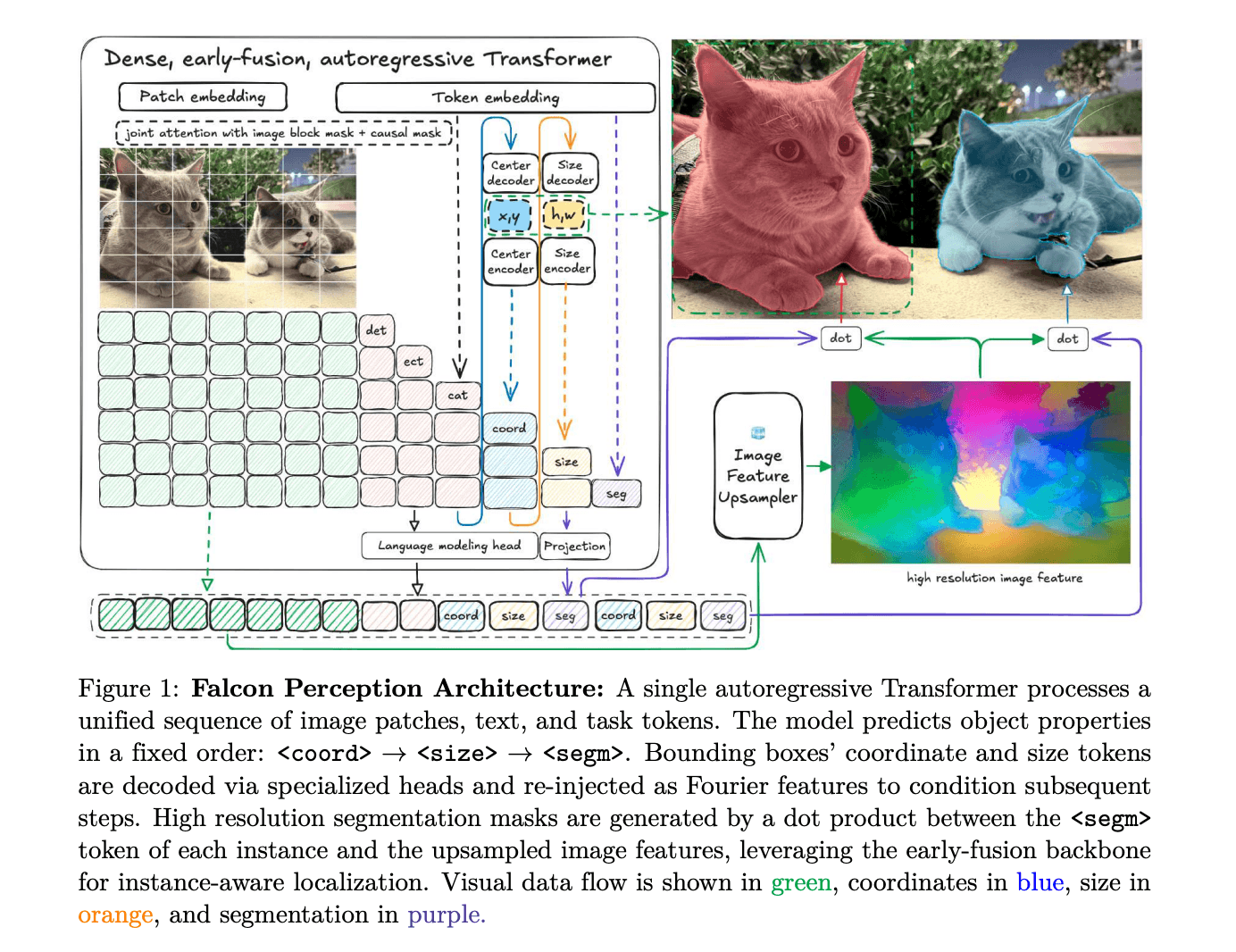
TII Releases Falcon Perception: A 0.6B-Parameter Early-Fusion Transformer for Open-Vocabulary Grounding and Segmentation from Natural Language Prompts
MarkTechPost

Portable eye scanner powered by AI expands access to low-cost community screening
Reddit r/artificial


