
Rethinking Token Prediction: Tree-Structured Diffusion Language Model
arXiv cs.CL / 4/7/2026
💬 OpinionIdeas & Deep AnalysisModels & Research
Key Points
- The paper argues that discrete diffusion language models are currently inefficient because the full-vocabulary token prediction head consumes a large share of parameters and dominates peak GPU memory.
- It proposes a tree-structured diffusion approach that replaces full-vocabulary classification with predictions over a vocabulary tree using ancestor-based latent states, drastically reducing classification dimensionality.
- By making the prediction head nearly negligible, the method reallocates capacity to deepen attention blocks while keeping the overall parameter budget fixed.
- Experiments report a 50% reduction in peak GPU memory usage while matching state-of-the-art perplexity results for discrete diffusion language models.
- Overall, the work reframes token prediction as a structured factorization problem, aiming to make diffusion-based LLM training more practical under tight hardware limits.
Related Articles
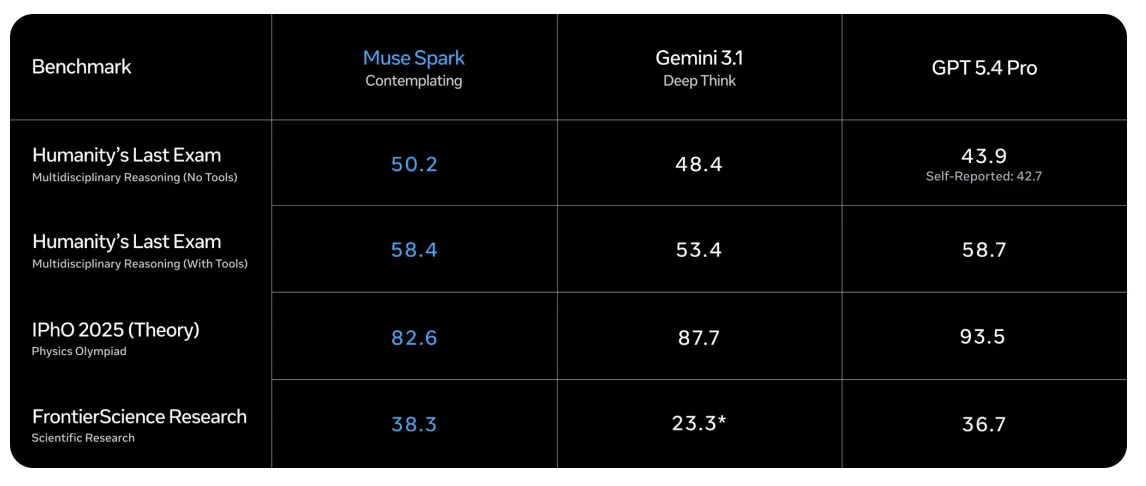
Meta Superintelligence Lab Releases Muse Spark: A Multimodal Reasoning Model With Thought Compression and Parallel Agents
MarkTechPost

Chatbots are great at manipulating people to buy stuff, Princeton boffins find
The Register

Big Tech firms are accelerating AI investments and integration, while regulators and companies focus on safety and responsible adoption.
Dev.to
v0.20.5
Ollama Releases

Charades-Ego: A Large-Scale Dataset of Paired Third and First Person Videos
Dev.to


