
TrajectoryMover: Generative Movement of Object Trajectories in Videos
arXiv cs.CV / 4/1/2026
💬 OpinionIdeas & Deep AnalysisModels & Research
Key Points
- The paper introduces TrajectoryMover to perform generative video editing that moves an object’s 3D motion trajectory while preserving its relative 3D motion and identity.
- It argues that prior approaches miss this capability due to the lack of paired video data where one trajectory can be modified without breaking realism and identity.
- To address the pairing problem, the authors propose TrajectoryAtlas, a new large-scale synthetic data generation pipeline for creating suitable paired training examples.
- TrajectoryMover is then fine-tuned on this synthetic paired dataset, and the authors report that the method successfully enables trajectory movement in videos.
- The work positions generative movement of object trajectories as a missing piece in trajectory-based video editing workflows for both realism and controllability.
Related Articles

Show HN: 1-Bit Bonsai, the First Commercially Viable 1-Bit LLMs
Dev.to

I Built an AI Agent That Can Write Its Own Tools When It Gets Stuck
Dev.to

Agent Self-Discovery: How AI Agents Find Their Own Wallets
Dev.to
[P] Federated Adversarial Learning
Reddit r/MachineLearning
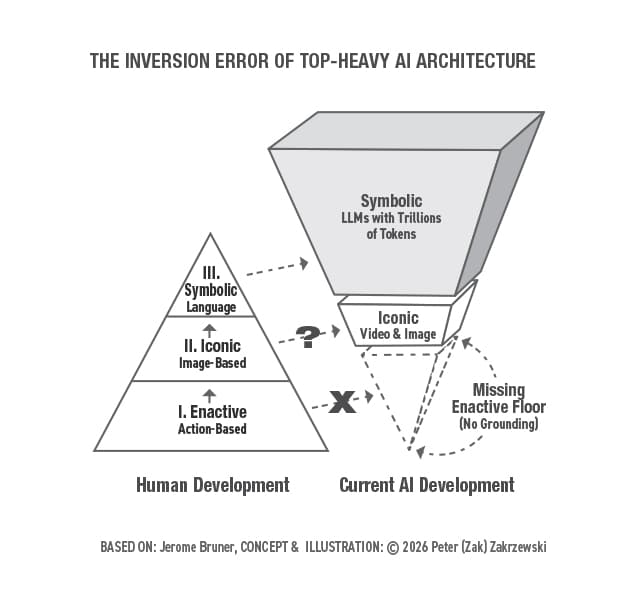
The Inversion Error: Why Safe AGI Requires an Enactive Floor and State-Space Reversibility
Towards Data Science


