
The Inverse-Wisdom Law: Architectural Tribalism and the Consensus Paradox in Agentic Swarms
arXiv cs.AI / 5/1/2026
📰 NewsSignals & Early TrendsIdeas & Deep AnalysisModels & Research
Key Points
- The paper argues that multi-agent swarms can deviate from the expected “wisdom of the crowd” effect by formalizing a “Consensus Paradox,” where agents’ architectural agreement outweighs external logical correctness.
- Across 36 experiments (12,804 trajectories) on GAIA, Multi-Challenge, and SWE-bench, the authors claim an “Inverse-Wisdom Law”: adding logical agents in kinship-dominant swarms can stabilize incorrect trajectories rather than increase the chance of truth.
- The study reports convergence toward a “Logic Saturation” state where internal entropy drops to zero while factual error rises to unity, implying that more consensus mechanisms may worsen correctness.
- By comparing three SOTA models (Gemini 3.1 Pro, Claude Sonnet 4.6, GPT-5.4), the authors propose “Architectural Tribalism Asymmetry” as a mechanistic property tied to transformer weights, and suggest swarm integrity depends on a synthesizer’s receptive logic more than overall agent quality.
- The paper introduces metrics (Tribalism Coefficient, Sycophantic Weight) and proposes the “Heterogeneity Mandate” as a safety requirement for more resilient agentic architectures.
Related Articles
Why Autonomous Coding Agents Keep Failing — And What Actually Works
Dev.to

Text-to-image is easy. Chaining LLMs to generate, critique, and iterate on images autonomously is a routing nightmare. AgentSwarms now supports Image generation playground and creative media workflows!
Reddit r/artificial
Why Enterprise AI Pilots Fail
Dev.to
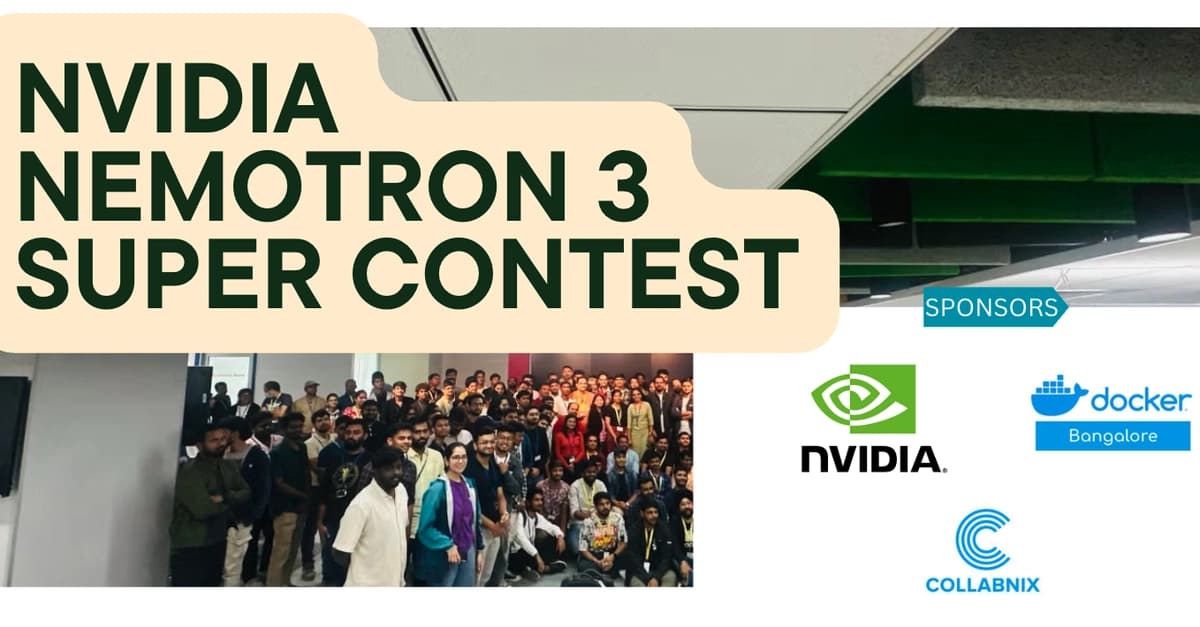
Announcing the NVIDIA Nemotron 3 Super Build Contest
Dev.to
75% of Sites Blocking AI Bots Still Get Cited. Here Is Why Blocking Does Not Work.
Dev.to


