
Chain-of-Models Pre-Training: Rethinking Training Acceleration of Vision Foundation Models
arXiv cs.CV / 4/15/2026
💬 OpinionSignals & Early TrendsIdeas & Deep AnalysisModels & Research
Key Points
- The paper introduces Chain-of-Models Pre-Training (CoM-PT), a training-acceleration method for vision foundation models that targets the entire model family rather than training each model independently.
- CoM-PT builds a “model chain” in ascending order of model size, where only the smallest model is fully pre-trained and larger models learn via sequential inverse knowledge transfer by reusing knowledge across parameter and feature spaces.
- Experiments on 45 datasets covering zero-shot and fine-tuning show that CoM-PT achieves mostly better-than-baseline performance while significantly reducing training cost.
- The method exhibits efficient scaling behavior, including cases where training more models increases overall efficiency, such as up to 72% computational complexity reduction for a ViT-L largest-model setup.
- The authors report that as model family size grows (e.g., 3→4→7 models), the acceleration ratio can jump substantially, and they open-source the code with suggested extensions to more computation-heavy settings like large language model pre-training.
Related Articles

Black Hat Asia
AI Business

The Complete Guide to Better Meeting Productivity with AI Note-Taking
Dev.to

5 Ways Real-Time AI Can Boost Your Sales Call Performance
Dev.to
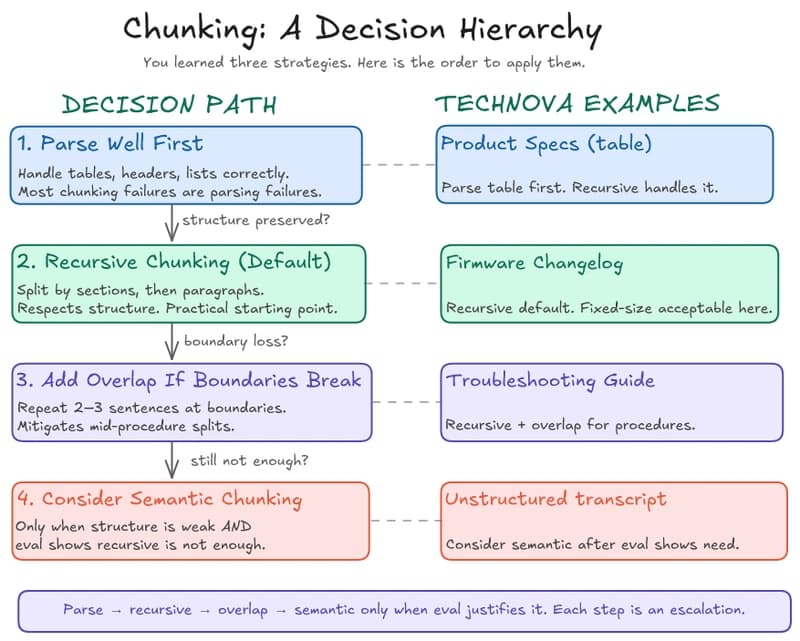
RAG in Practice — Part 4: Chunking, Retrieval, and the Decisions That Break RAG
Dev.to
Why dynamically routing multi-timescale advantages in PPO causes policy collapse (and a simple decoupled fix) [R]
Reddit r/MachineLearning


