
Mitigating Value Hallucination in Dyna Planning via Multistep Predecessor Models
arXiv stat.ML / 4/7/2026
💬 OpinionIdeas & Deep AnalysisModels & Research
Key Points
- Dyna-style reinforcement learning can fail when environment model errors cause simulated states to produce misleading value estimates that harm the learned control policy.
- The paper proposes the “Hallucinated Value Hypothesis (HVH),” arguing that bootstrapping real-state values toward simulated-state values can lead to incorrect action values and degraded behavior.
- It surveys a design space of Dyna variants across successor vs. predecessor models (forward vs. backward simulation) and one-step vs. multi-step updates.
- The authors introduce and evaluate the previously underexplored variant of using predecessor models with multi-step updates, finding it avoids the failure mode suggested by HVH.
- Experimental results indicate the HVH is supported and that predecessor models with multi-step updates are a promising route to making Dyna more robust to model error.
Related Articles
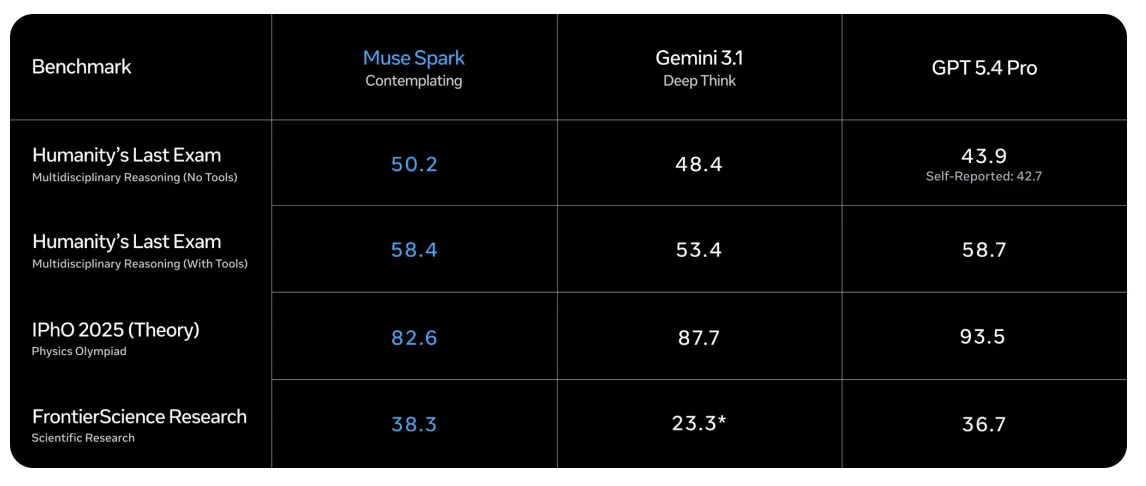
Meta Superintelligence Lab Releases Muse Spark: A Multimodal Reasoning Model With Thought Compression and Parallel Agents
MarkTechPost

Chatbots are great at manipulating people to buy stuff, Princeton boffins find
The Register

Big Tech firms are accelerating AI investments and integration, while regulators and companies focus on safety and responsible adoption.
Dev.to
v0.20.5
Ollama Releases

Charades-Ego: A Large-Scale Dataset of Paired Third and First Person Videos
Dev.to


