
A Comprehensive Information-Decomposition Analysis of Large Vision-Language Models
arXiv cs.CL / 4/1/2026
💬 OpinionIdeas & Deep AnalysisModels & Research
Key Points
- The paper proposes a model-agnostic framework that uses partial information decomposition (PID) to quantify how vision-language models derive decision-relevant information from redundant, unique, and synergistic components.
- It profiles 26 LVLMs across four datasets using a scalable estimator, analyzing “information spectrum” breadth across models/tasks, depth via layer-wise information dynamics, and time across training.
- The study identifies two task regimes—synergy-driven versus knowledge-driven—and two stable family-level strategies—fusion-centric versus language-centric—in how LVLMs form answers.
- It finds a consistent three-phase pattern in layer-wise processing and concludes that visual instruction tuning is the key stage where multimodal fusion is learned.
- The authors argue this quantitative approach extends beyond accuracy-only evaluation and can inform the analysis and design of next-generation LVLMs, with code/data provided in a public repository.
Related Articles

Show HN: 1-Bit Bonsai, the First Commercially Viable 1-Bit LLMs
Dev.to

I Built an AI Agent That Can Write Its Own Tools When It Gets Stuck
Dev.to

Agent Self-Discovery: How AI Agents Find Their Own Wallets
Dev.to
[P] Federated Adversarial Learning
Reddit r/MachineLearning
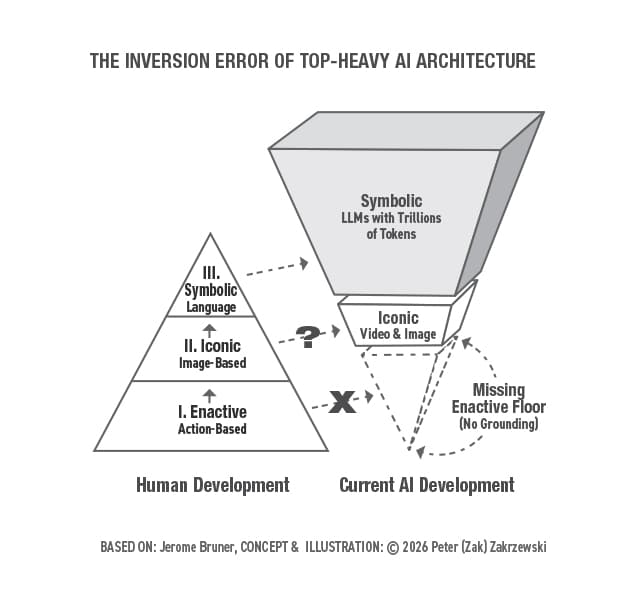
The Inversion Error: Why Safe AGI Requires an Enactive Floor and State-Space Reversibility
Towards Data Science


