
DOC-GS: Dual-Domain Observation and Calibration for Reliable Sparse-View Gaussian Splatting
arXiv cs.CV / 4/9/2026
💬 OpinionSignals & Early TrendsIdeas & Deep AnalysisModels & Research
Key Points
- The paper argues that sparse-view 3D Gaussian Splatting is ill-posed because Gaussian primitives become unreliable (insufficiently constrained), which manifests as haze-like structural distortions in renderings.
- It introduces DOC-GS, a Dual-Domain Observation and Calibration framework that combines an optimization-domain mechanism (CDGD dropout as a proxy for primitive reliability) with an observation-domain mechanism (using DCP cues tied to floater artifacts) to improve stability and artifact suppression.
- In the optimization domain, Continuous Depth-Guided Dropout imposes a smooth, depth-aware inductive bias to reduce the impact of weakly constrained Gaussians during training.
- In the observation domain, the method links haze/floater artifacts to atmospheric-scattering-like effects and uses cross-view aggregated evidence to detect anomalous regions.
- Finally, it applies a reliability-driven geometric pruning step to remove low-confidence Gaussians, aiming for more reliable sparse-view reconstruction quality.
Related Articles

Black Hat Asia
AI Business
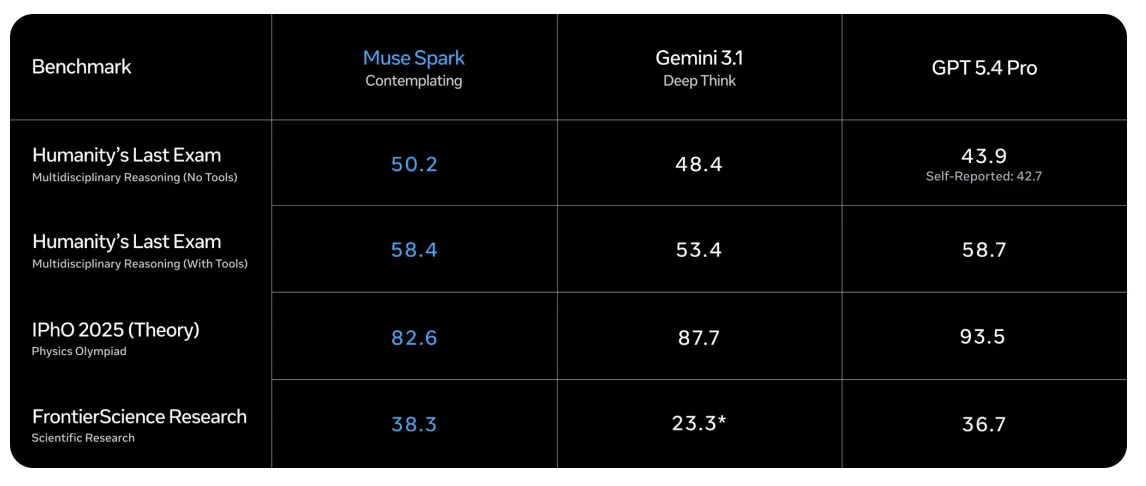
Meta Superintelligence Lab Releases Muse Spark: A Multimodal Reasoning Model With Thought Compression and Parallel Agents
MarkTechPost

Chatbots are great at manipulating people to buy stuff, Princeton boffins find
The Register
I tested and ranked every ai companion app I tried and here's my honest breakdown
Reddit r/artificial

Big Tech firms are accelerating AI investments and integration, while regulators and companies focus on safety and responsible adoption.
Dev.to


