
Neural Network-Based Adaptive Event-Triggered Control for Dual-Arm Unmanned Aerial Manipulator Systems
arXiv cs.RO / 4/21/2026
📰 NewsDeveloper Stack & InfrastructureIdeas & Deep AnalysisModels & Research
Key Points
- The paper addresses stability and accuracy challenges in dual-arm unmanned aerial manipulator systems caused by strong coupling, unmodeled dynamics, and external disturbances.
- It proposes an adaptive event-triggered control framework that uses neural networks to approximate external frictions while incorporating communication constraints.
- A dynamic model of the DAUAM is derived and a command-filter-based backstepping controller with error compensation is constructed to handle tracking.
- An event-triggered update rule reduces the frequency of control transmissions, aiming to lower communication and energy consumption.
- Lyapunov-based theoretical analysis and experiments on a self-built platform both indicate bounded signals and accurate trajectory tracking with tracking error converging within a fixed time.
Related Articles
A practical guide to getting comfortable with AI coding tools
Dev.to

Every time a new model comes out, the old one is obsolete of course
Reddit r/LocalLLaMA

We built it during the NVIDIA DGX Spark Full-Stack AI Hackathon — and it ended up winning 1st place overall 🏆
Dev.to

Stop Losing Progress: Setting Up a Pro Jupyter Workflow in VS Code (No More Colab Timeouts!)
Dev.to
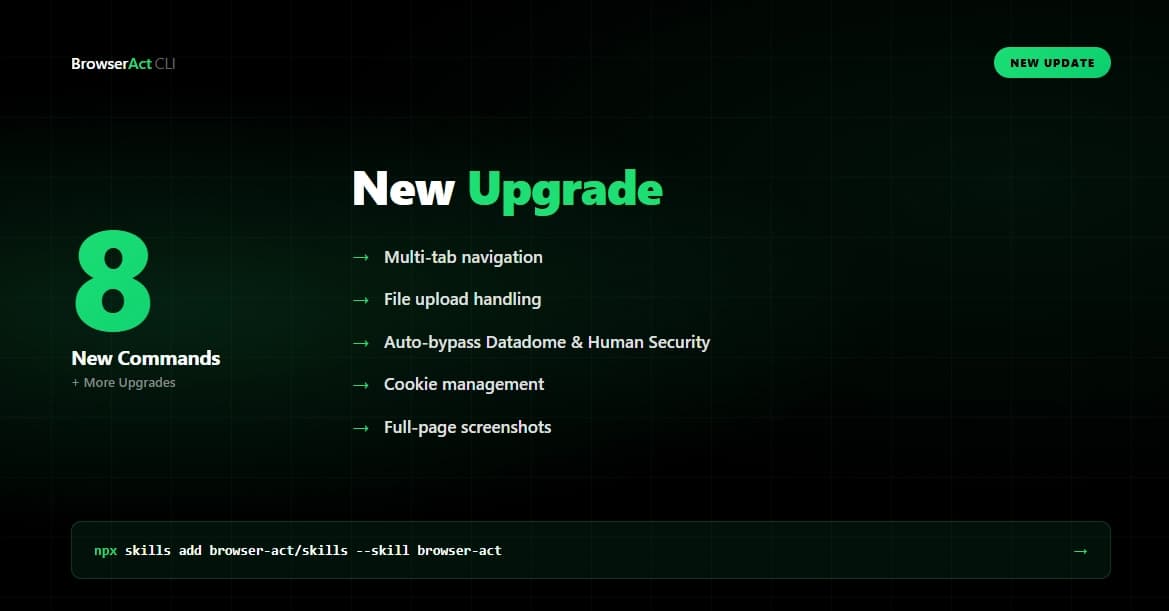
🚀 Major BrowserAct CLI Update
Dev.to


