
GraphER: An Efficient Graph-Based Enrichment and Reranking Method for Retrieval-Augmented Generation
arXiv cs.LG / 3/27/2026
📰 NewsIdeas & Deep AnalysisModels & Research
Key Points
- The paper argues that semantic search inside RAG systems can fail when evidence is scattered across multiple sources, and that agentic retrieval can be inefficient because it expands search iteratively without fully exploiting data structure.
- It proposes GraphER, which enriches data offline during indexing and then performs graph-based reranking at query time to capture multiple proximities beyond raw semantic similarity.
- GraphER avoids the need for maintaining a knowledge graph and is designed to work directly with standard vector stores commonly used in production.
- The method is retriever-agnostic and is reported to add negligible latency overhead, with experiments showing improved performance across several retrieval benchmarks.
広告
Related Articles

Got My 39-Agent System Audited Live. Here's What the Maturity Scorecard Revealed.
Dev.to

The Redline Economy
Dev.to

$500 GPU outperforms Claude Sonnet on coding benchmarks
Dev.to

From Scattershot to Sniper: AI for Hyper-Personalized Media Lists
Dev.to
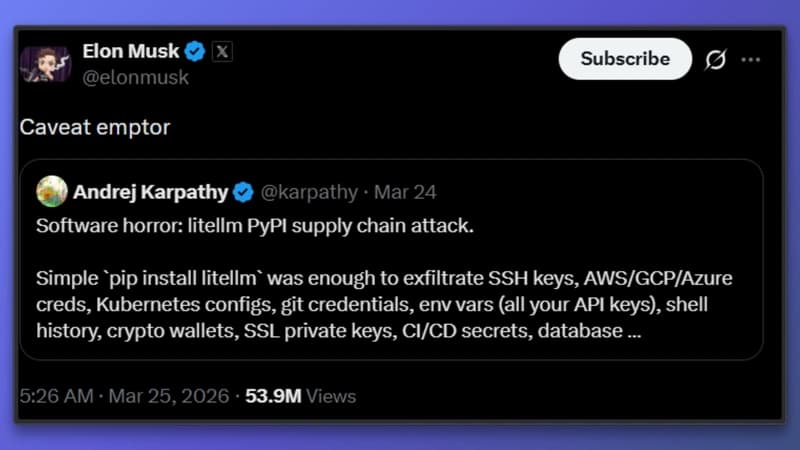
The LiteLLM Supply Chain Attack: A Wake-Up Call for AI Infrastructure
Dev.to


