
Intervention-Based Self-Supervised Learning: A Causal Probe Paradigm for Remote Photoplethysmography
arXiv cs.CV / 5/5/2026
📰 NewsIdeas & Deep AnalysisModels & Research
Key Points
- Remote photoplethysmography (rPPG) self-supervised learning methods often overfit to dominant periodic artifacts (e.g., motion and illumination noise) instead of the subtle true rPPG signal, hurting generalization.
- The paper introduces Physiological Causal Probing (PCP), a new self-supervised paradigm that replaces passive correlation learning with active, hypothesis-driven video interventions to test physical plausibility.
- It proposes the Interv-rPPG framework, combining an rPPG hypotheses model (“PhysMambaFormer”) with a controllable signal editor that performs chrominance-domain interventions in low-frequency components.
- The approach validates causal hypotheses using “Falsifiability via Nulling” and “Axiomatic Equivariance,” and shows improved in-domain and cross-domain performance on VIPL-HR and MMPD, including beating supervised baselines in harder cross-dataset settings.
- Extensive diagnostics indicate the method is robust to motion and illumination artifacts while remaining competitive on cleaner datasets where intervention may leave minor residual chrominance noise.
Related Articles
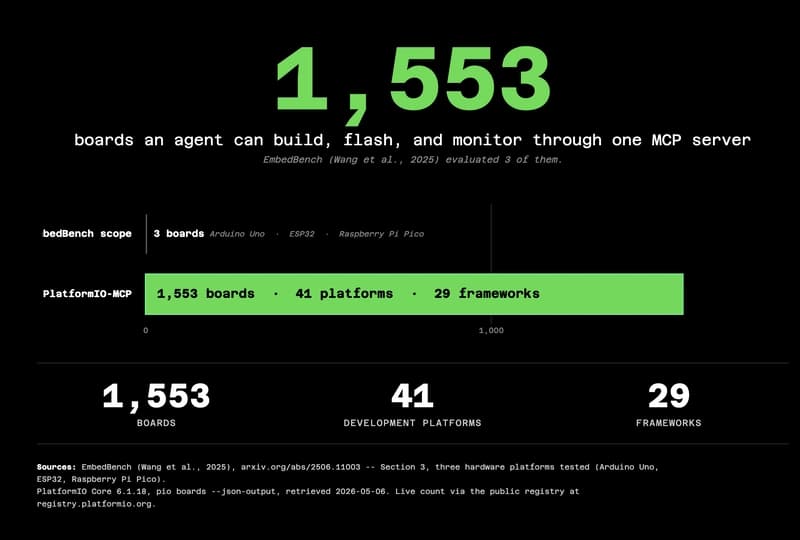
The 55.6% problem: why frontier LLMs fail at embedded code
Dev.to
Four CVEs in a week, all the same shape: when agents execute LLM-generated code
Dev.to
Healthcare AI Is Absorbing Institutional Knowledge It Can't Actually Hold
Reddit r/artificial
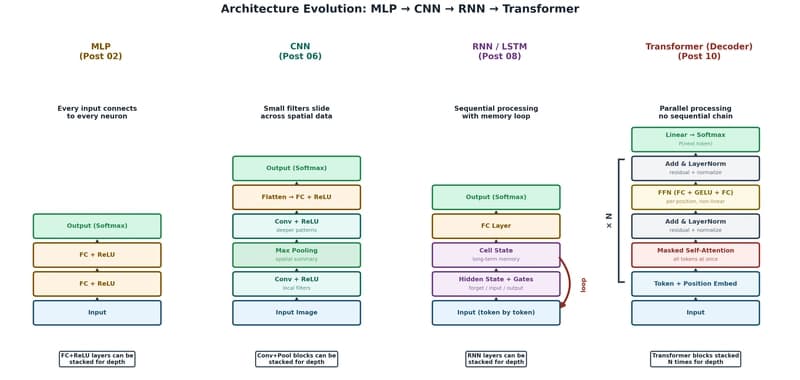
The Transformer: The Architecture Behind Modern AI
Dev.to

Foundational Models Defining a New Era in Vision: A Survey and Outlook
Dev.to


