
Decentralized Learning via Random Walk with Jumps
arXiv cs.LG / 4/15/2026
📰 NewsSignals & Early TrendsIdeas & Deep AnalysisModels & Research
Key Points
- The paper studies decentralized learning without a central coordinator, using token-based random-walk propagation of a single model with local updates at visited nodes to keep communication and computation overhead low.
- It analyzes weighted random-walk learning that designs a transition matrix to sample from a target distribution, improving convergence under data heterogeneity, but shows that Metropolis-Hastings weighting can cause an “entrapment” effect where the walk gets stuck in a small network region.
- The authors propose “Metropolis-Hastings with Lévy jumps” to periodically introduce long-range transitions, restoring exploration while still respecting local information constraints.
- A new convergence-rate analysis is provided, explicitly linking performance to data heterogeneity, the network spectral gap, and the jump probability.
- Experiments indicate that MHLJ removes entrapment and substantially speeds up decentralized learning compared with the weighted Metropolis-Hastings approach.
Related Articles

Black Hat Asia
AI Business
The Complete Guide to Better Meeting Productivity with AI Note-Taking
Dev.to
5 Ways Real-Time AI Can Boost Your Sales Call Performance
Dev.to
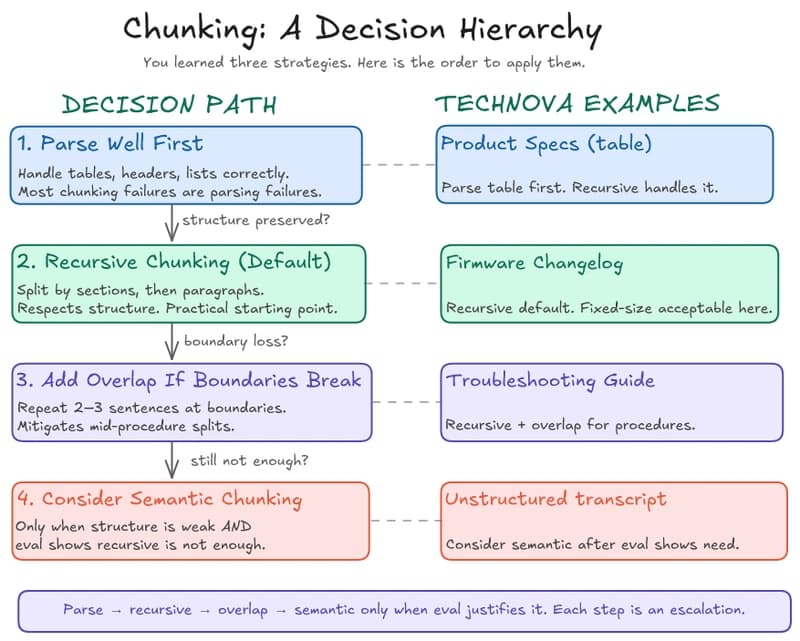
RAG in Practice — Part 4: Chunking, Retrieval, and the Decisions That Break RAG
Dev.to
Why dynamically routing multi-timescale advantages in PPO causes policy collapse (and a simple decoupled fix) [R]
Reddit r/MachineLearning


