
AutoPyVerifier: Learning Compact Executable Verifiers for Large Language Model Outputs
arXiv cs.CL / 4/28/2026
📰 NewsDeveloper Stack & InfrastructureSignals & Early TrendsModels & Research
Key Points
- The paper introduces AutoPyVerifier, which learns a compact set of deterministic Python verifier functions from LLM outputs and objective labels by aiming to closely match a target verification objective (e.g., correctness).
- It uses an LLM to synthesize candidate verifier functions and then refines the selection via search over a DAG to explore the verifier space and pick a small set with the best joint satisfaction.
- Experiments across multiple benchmarks (mathematical reasoning, coding, function calling, and instruction-following) show up to a 55.0-point F1 improvement over the initial LLM-generated verifier sets.
- The authors find that which verification targets are most effective depends on the benchmark and model, and that DAG-based search produces verifiers that are more structural and semantically grounded.
- Providing the discovered verifier set to an LLM as an external tool yields up to a 17.0-point improvement in downstream accuracy, and the code is released.
Related Articles
LLMs will be a commodity
Reddit r/artificial
HubSpot Just Legitimized AEO: What It Means for Your Brand AI Visibility
Dev.to

What it feels like to have to have Qwen 3.6 or Gemma 4 running locally
Reddit r/LocalLLaMA
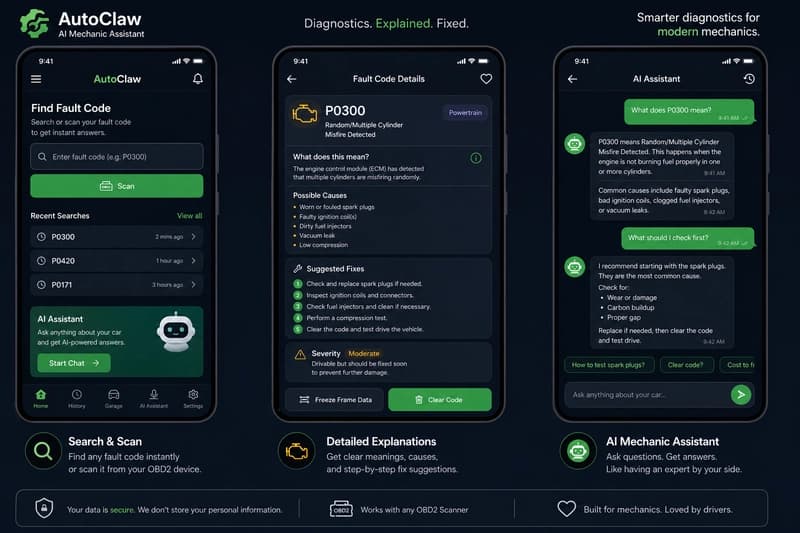
From Fault Codes to Smart Fixes: How Google Cloud NEXT ’26 Inspired My AI Mechanic Assistant
Dev.to

Dex lands $5.3M to grow its AI-driven talent matching platform
Tech.eu


