
Interoceptive machine framework: Toward interoception-inspired regulatory architectures in artificial intelligence
arXiv cs.AI / 4/28/2026
💬 OpinionIdeas & Deep AnalysisModels & Research
Key Points
- The article introduces an “interoceptive machine framework” that uses interoception-inspired ideas to build computational architectures for adaptive autonomy in AI agents.
- It frames internal-state regulation through three abstraction-level principles—homeostatic, allostatic, and enactive—each mapping to specific computational roles such as viability regulation, anticipatory uncertainty re-evaluation, and interaction-driven data generation.
- The framework is presented as an actionable and testable design pathway rather than a direct mapping to neurophysiology, aiming to improve self-regulation and context sensitivity.
- The authors argue that embedding internal state variables and regulatory loops can yield more robust decision-making, better-calibrated uncertainty handling, and more effective interaction strategies in uncertain, dynamic environments.
- The work highlights potential implications for human-computer interaction and assistive technologies by enabling agents with functionally grounded self-regulation.
Related Articles

Big Tech firms are accelerating AI investments and integration, while regulators and companies focus on safety and responsible adoption.
Dev.to
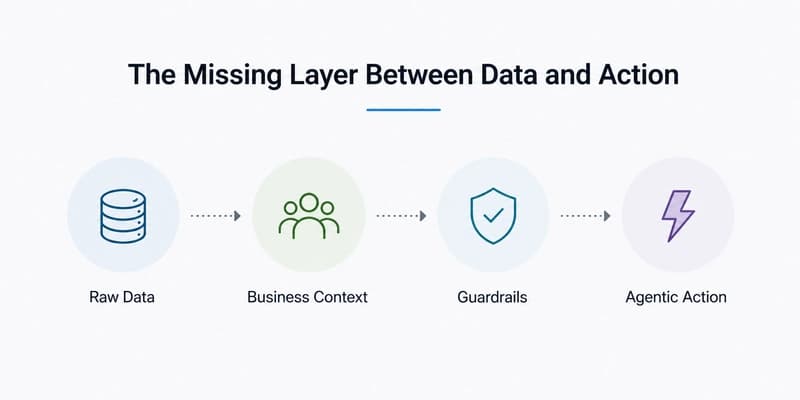
Everyone Wants AI Agents. Fewer Teams Are Ready for the Messy Business Context Behind Them
Dev.to
AI 编程工具对比 2026:Claude Code vs Cursor vs Gemini CLI vs Codex
Dev.to

How I Improved My YouTube Shorts and Podcast Audio Workflow with AI Tools
Dev.to

An improvement of the convergence proof of the ADAM-Optimizer
Dev.to


