
Skill Retrieval Augmentation for Agentic AI
arXiv cs.CL / 4/28/2026
📰 NewsIdeas & Deep AnalysisModels & Research
Key Points
- The paper argues that agentic LLMs need reusable external skills beyond what can fit in their context window, and that explicitly enumerating skills does not scale as skill corpora grow.
- It proposes Skill Retrieval Augmentation (SRA), a paradigm where agents dynamically retrieve, incorporate, and apply relevant skills from large external skill corpora as needed.
- The work introduces SRA-Bench and a large skill corpus (26,262 skills), including 5,400 capability-intensive test instances and 636 gold skills mixed with distractors to evaluate the full SRA pipeline.
- Experiments show retrieval-based skill augmentation can significantly improve agent performance, but they also reveal a key gap: agents often load skills at similar rates even when a task does not require external capabilities.
- The authors conclude that the main bottleneck is not only retrieval quality, but also the base model’s ability to decide which skills to load and when external loading is truly necessary.
Related Articles

Big Tech firms are accelerating AI investments and integration, while regulators and companies focus on safety and responsible adoption.
Dev.to
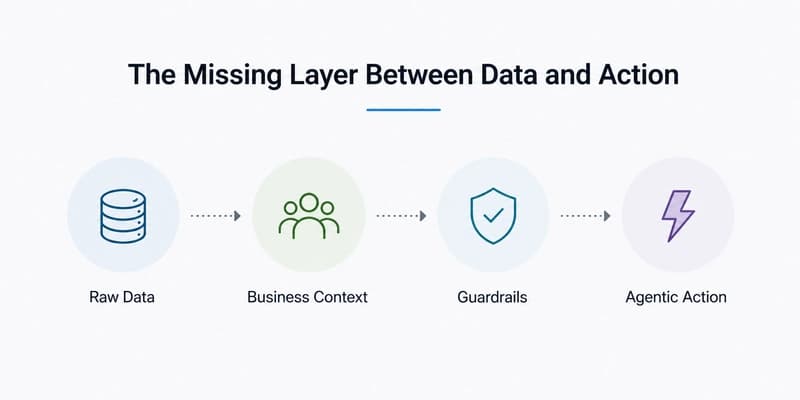
Everyone Wants AI Agents. Fewer Teams Are Ready for the Messy Business Context Behind Them
Dev.to
AI 编程工具对比 2026:Claude Code vs Cursor vs Gemini CLI vs Codex
Dev.to

How I Improved My YouTube Shorts and Podcast Audio Workflow with AI Tools
Dev.to

An improvement of the convergence proof of the ADAM-Optimizer
Dev.to


