
English to Central Kurdish Speech Translation: Corpus Creation, Evaluation, and Orthographic Standardization
arXiv cs.CL / 4/3/2026
💬 OpinionIdeas & Deep AnalysisModels & Research
Key Points
- The paper introduces KUTED, a new English-to-Central Kurdish speech-to-text translation dataset built from TED and TEDx talks, containing 91,000 sentence pairs and 170 hours of English audio.
- Experiments show that orthographic variation in the Central Kurdish text significantly harms translation quality, leading to nonstandard outputs.
- The authors propose a systematic orthographic standardization method that produces substantial improvements and more consistent translations.
- On a TED-separated test set, a fine-tuned Seamless model reaches 15.18 BLEU, improving the Seamless baseline by 3.0 BLEU on the FLEURS benchmark.
- The study also includes training a Transformer from scratch and evaluating a cascaded system that combines Seamless (ASR) with NLLB (machine translation).
Related Articles

90000 Tech Workers Got Fired This Year and Everyone Is Blaming AI but Thats Not the Whole Story
Dev.to

Microsoft’s $10 Billion Japan Bet Shows the Next AI Battleground Is National Infrastructure
Dev.to
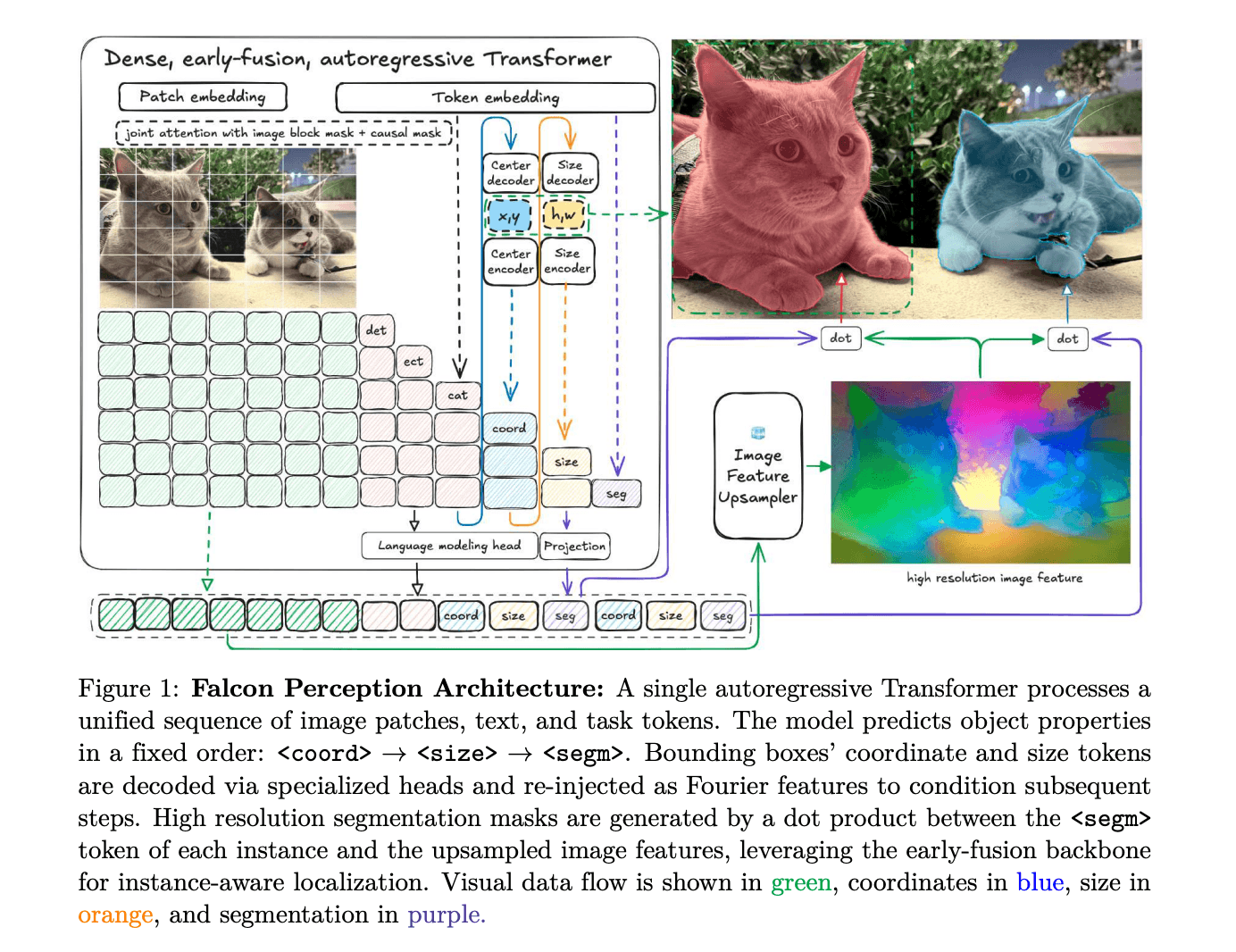
TII Releases Falcon Perception: A 0.6B-Parameter Early-Fusion Transformer for Open-Vocabulary Grounding and Segmentation from Natural Language Prompts
MarkTechPost
The house asked me a question
Dev.to

Precision Clip Selection: How AI Suggests Your In and Out Points
Dev.to


