
Explanation Quality Assessment as Ranking with Listwise Rewards
arXiv cs.AI / 4/28/2026
📰 NewsDeveloper Stack & InfrastructureSignals & Early TrendsIdeas & Deep AnalysisModels & Research
Key Points
- The paper reframes explanation quality assessment from explanation generation to a ranking task that compares multiple candidate explanations by relative quality.
- It trains reward models using listwise and pairwise ranking losses (including ListNet, LambdaRank, and RankNet) to preserve ordinal relationships and reduce issues like score compression.
- Experiments show ranking-based losses outperform regression-based approaches for better score separation across tested domains.
- The best ranking objective varies with data properties: listwise methods work best with well-separated quality tiers, while pairwise methods handle noisy annotations more robustly.
- When used for reinforcement learning reward signals, ranking-based scores provide more stable convergence than regression-based rewards, and smaller encoder models can perform competitively with much larger models given high-quality curated data.
Related Articles

Big Tech firms are accelerating AI investments and integration, while regulators and companies focus on safety and responsible adoption.
Dev.to
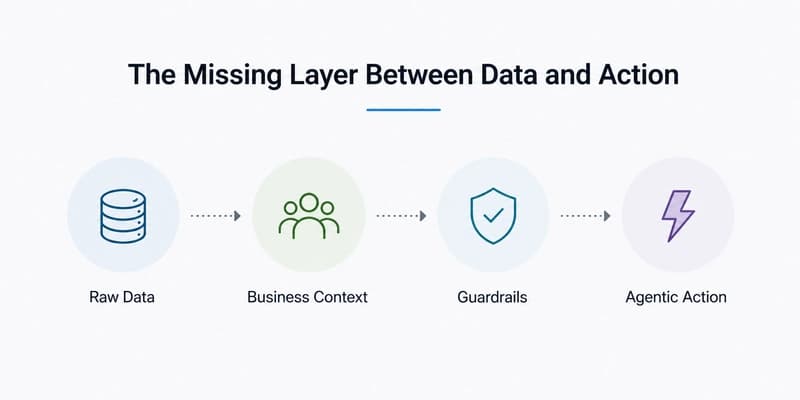
Everyone Wants AI Agents. Fewer Teams Are Ready for the Messy Business Context Behind Them
Dev.to
Free Registration & $20K Prize Pool: 2nd MLC-SLM Challenge 2026 on Multilingual Speech LLMs [N]
Reddit r/MachineLearning
How to Build Traceable and Evaluated LLM Workflows Using Promptflow, Prompty, and OpenAI
MarkTechPost
AI 编程工具对比 2026:Claude Code vs Cursor vs Gemini CLI vs Codex
Dev.to


