
Heat and Mat\'ern Kernels on Matchings
arXiv cs.LG / 4/17/2026
📰 NewsModels & Research
Key Points
- The paper proposes a principled framework for building geometric kernel methods for matchings by respecting the inherent non-Euclidean geometry of the matching space.
- It characterizes stationary kernels for matchings in a way that captures the space’s natural symmetries, then narrows to heat and Matérn kernel families with an added smoothness inductive bias.
- Although these kernels extend popular Euclidean kernel families to matchings, naive evaluation is computationally intractable due to a super-exponential cost.
- To enable practical use, the authors develop and analyze a new sub-exponential evaluation algorithm based on zonal polynomials.
- The work further investigates transferring the framework from matchings to phylogenetic trees (via a known bijection), reporting novel negative results and outlining a significant open problem.
Related Articles
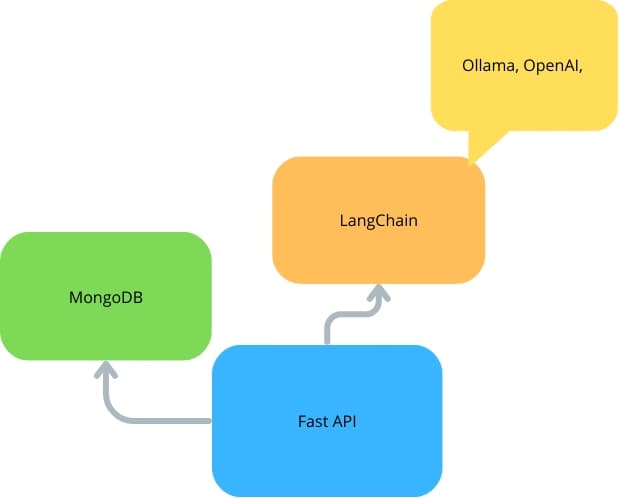
FastAPI With LangChain and MongoDB
Dev.to
![[2026] OpenTelemetry for LLM Observability — Self-Hosted Setup](/_next/image?url=https%3A%2F%2Fmedia2.dev.to%2Fdynamic%2Fimage%2Fwidth%3D1200%2Cheight%3D627%2Cfit%3Dcover%2Cgravity%3Dauto%2Cformat%3Dauto%2Fhttps%253A%252F%252Fdev-to-uploads.s3.amazonaws.com%252Fuploads%252Farticles%252Flu4b6ttuhur71z5gemm0.png&w=3840&q=75)
[2026] OpenTelemetry for LLM Observability — Self-Hosted Setup
Dev.to

The AI Education Product on Product Hunt Worth Watching
Dev.to

The joy and pain of training an LLM from scratch
Reddit r/LocalLLaMA

Did you know that you can use Qwen3.5-35B-A3B-Base as an instruction/reasoning Model?
Reddit r/LocalLLaMA


